Chocolate Protein Muffins (Cottage Cheese + Oats, 31g Protein)
It's 3:30 p.m. and the afternoon has hit. There's a protein bar in your bag that tastes like sweet cardboard, and a coffee shop across the street with chocolate muffins the size of your fist. One leaves a chalky film on your tongue; the other is mostly sugar and white flour.
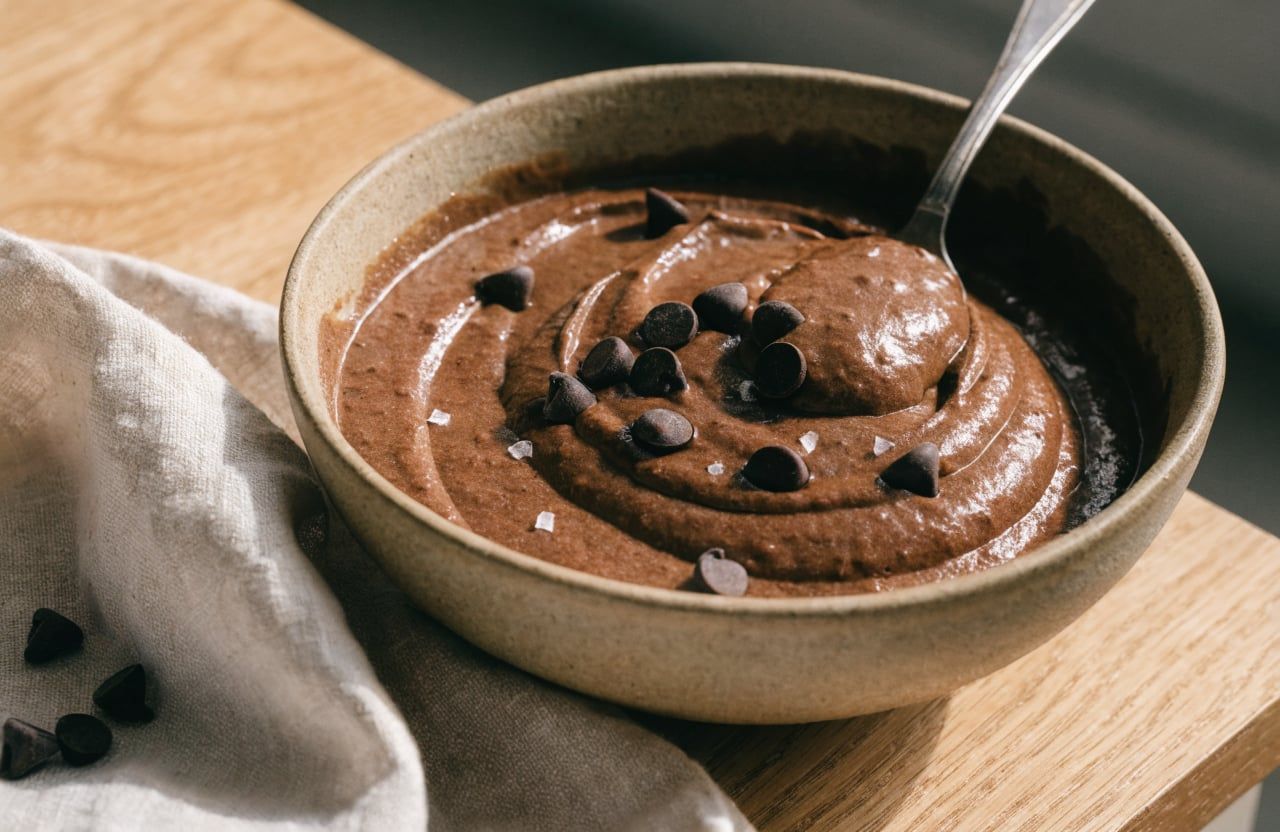
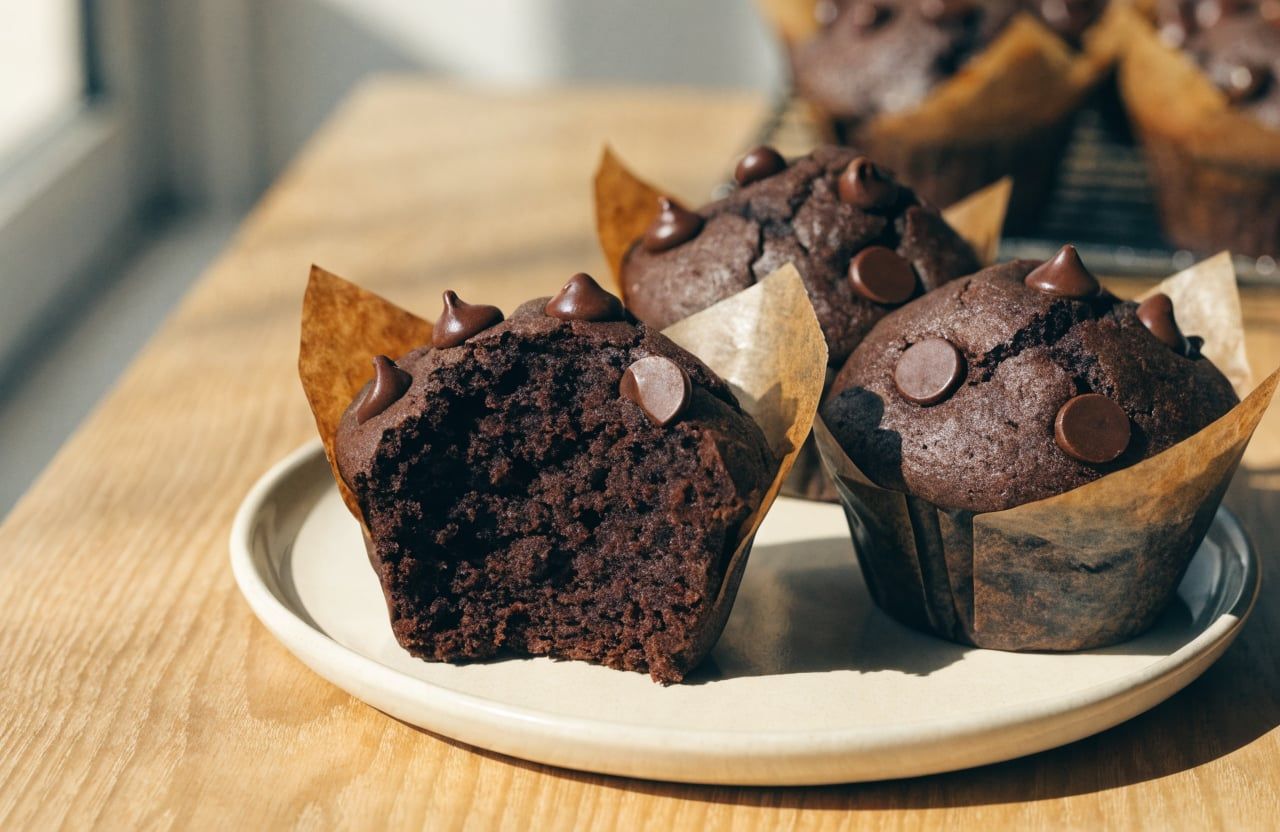
These muffins sit in the middle. They're dark, moist and chocolatey, with melted chocolate chips on top, and the batter is built on blended cottage cheese, oats, eggs and chocolate whey. Two of them give you 31 grams of protein for about 370 calories.
Fifteen minutes of work gets you twelve muffins, enough for six snacks. The bake time is what separates a fudgy protein muffin from a dry one, so watch the cues below.
Why it works
Protein in every layer of the batter
Two cups of 1% cottage cheese bring about 56 grams of protein, three scoops of whey add 70, and the eggs, egg whites, oats and cocoa add another 62. That's roughly 188 grams across the batch, or 31 in two muffins, where a single bakery chocolate muffin rarely reaches 10.
A blender and one bowl
The blender turns the cottage cheese, eggs and oats into a smooth base in one minute. You whisk the dry ingredients in a bowl, fold the two together and let the batter rest while the oven heats. Twelve muffins cover a week of afternoon snacks, and they freeze well.
Moist instead of chalky
Whey on its own dries out and turns springy in the oven. Here it's only part of the batter: blended cottage cheese keeps the crumb moist, the oil coats the proteins so they stay tender, and brown sugar holds on to water. Dutch-process cocoa and chocolate chips give it a real bakery flavor that covers the powder.
Nutrition per serving
- Calories
- 371 kcal
- Protein
- 31 g
- Carbs
- 36 g
- Fat
- 13 g
- Fiber
- 5.1 g
Nutrition calculated from USDA FoodData Central
Recipe
Chocolate Protein Muffins (Cottage Cheese + Oats, 31g Protein)
Protein in this batch: 186 g
Equipment
- Blender
- Large mixing bowl
- Whisk and silicone spatula
- 12-cup muffin pan
- Silicone or parchment muffin liners (optional)
- Wire rack
Ingredients
1% or 2% both work. Drain the liquid on top of the tub before measuring, or the batter runs thin and the muffins come out gummy.
Use whey or whey isolate. A whey-casein blend soaks up more liquid and bakes denser, and plant protein turns gritty. Vanilla whey works too; the muffins just taste less intensely chocolate.
Instructions
Heat the oven and prep the pan
Heat the oven to 350°F (175°C) with a rack in the center. Line a 12-cup muffin pan with silicone or parchment liners, or coat every cup generously with cooking spray, sides included. Skip regular paper liners: this egg-rich batter bonds to paper and tears the muffins apart when you peel it.
Blend the wet base
Add the cottage cheese, eggs, egg whites, oil, vanilla, brown sugar and oats to a blender. Blend on high for about 60 seconds, until the base is completely smooth, with no curds and no visible pieces of oat. It should look like a thick, pale tan milkshake. Scrape down the sides once halfway through.
Whisk the dry ingredients and combine
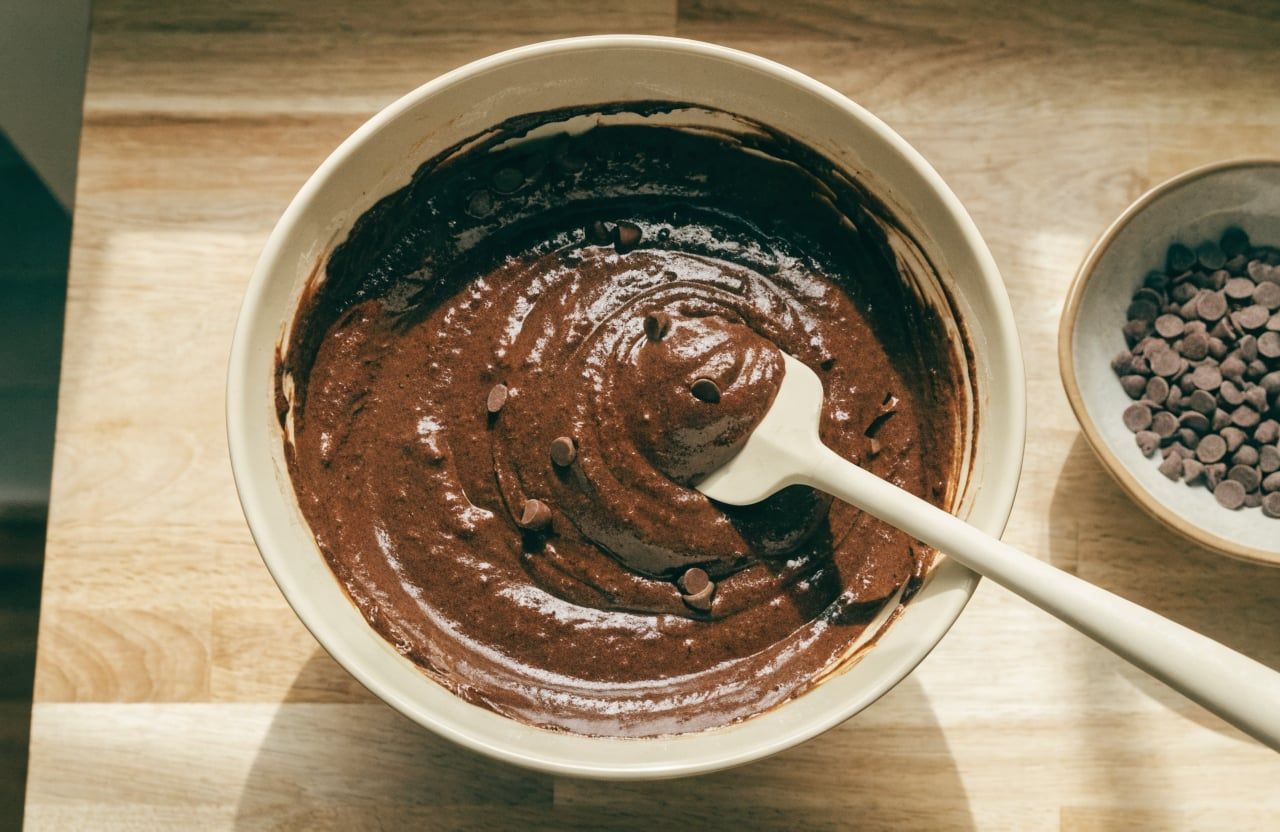
In a large bowl, whisk the whey, cocoa, baking powder and salt until the color is even and no lumps of cocoa remain. Pour in the blended base and fold with a spatula until there are no dry streaks. The batter will be thick, glossy and dark brown, like brownie batter. Fold in three-quarters of the chocolate chips.
Rest the batter for 10 minutes
Leave the batter in the bowl for 10 minutes while the oven finishes heating. The ground oats and the powders absorb liquid and the batter thickens enough to hold a soft mound on a spoon. That extra body is what lets the muffins dome instead of spreading flat, and it smooths out any grainy texture.
Fill the cups to the rim
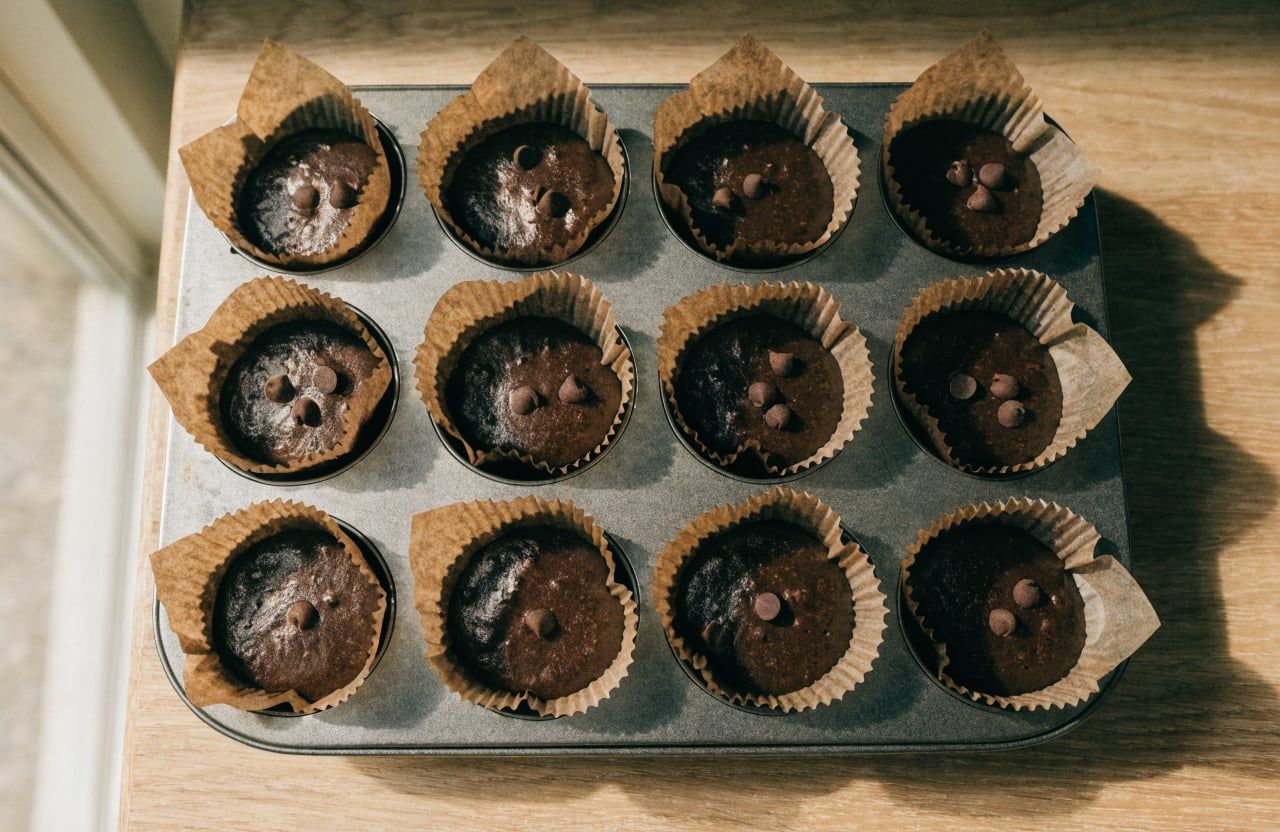
Divide the batter among the 12 cups, about 1/3 cup each, filling them almost to the rim. This batter rises less than a flour batter, so full cups give you a proper muffin shape. Smooth the tops with a wet spoon and press the remaining chocolate chips lightly into the surface.
Bake until just set
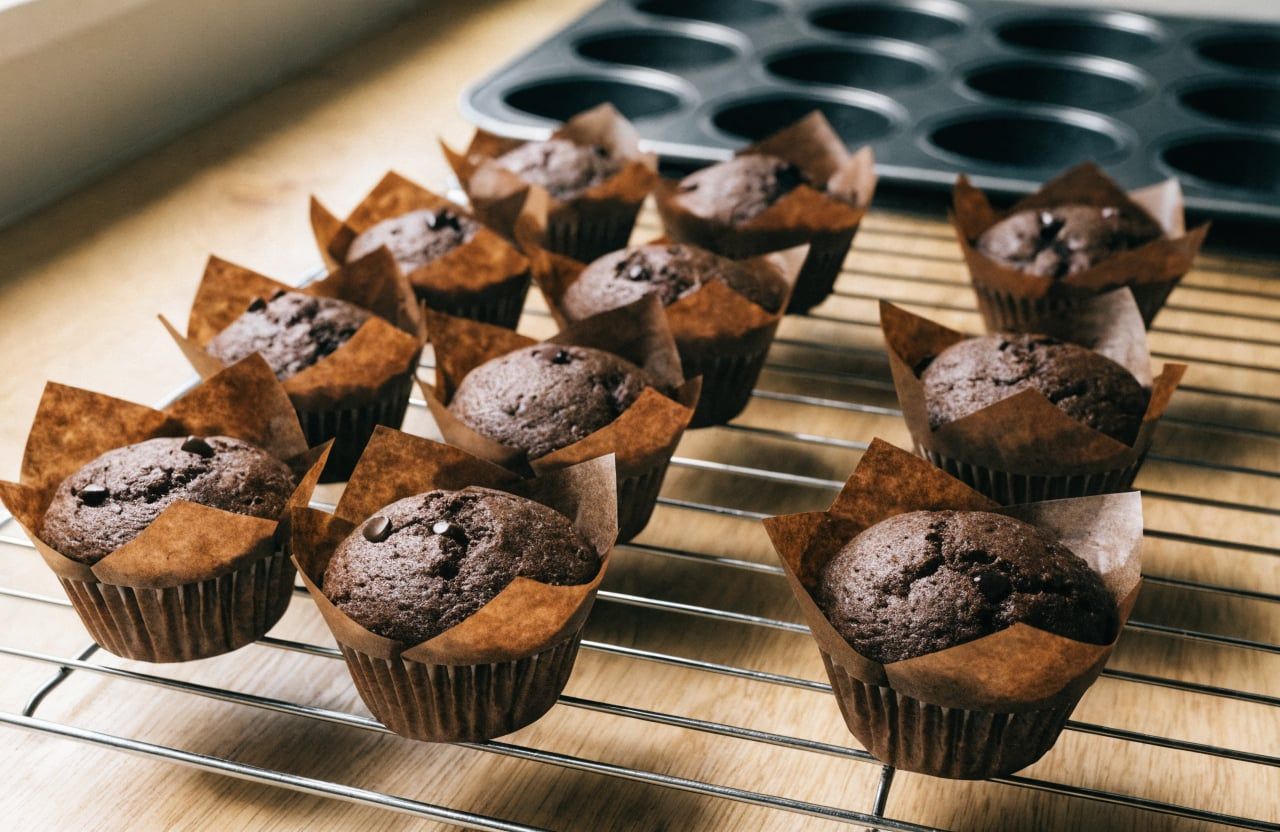
Bake for 20 to 24 minutes. They're done when the tops are domed and matte with small cracks, they spring back when you press the center lightly, and a toothpick inserted in the middle comes out with a few moist crumbs but no wet batter. Pull them at that point: they keep firming as they cool.
Cool before eating
Let the muffins cool in the pan for 10 minutes, then move them to a wire rack. Straight from the oven the centers are soft and a little gummy; after 20 to 30 minutes on the rack the crumb sets into a moist, fudgy texture. Peel off the liners once they're completely cool.
Per serving: 371 kcal · 31 g protein · 36 g carbs · 13 g fat · 5.1 g fiber. Nutrition calculated from USDA FoodData Central.
Mistakes to avoid
Baking until the toothpick is dry
A clean toothpick means the whey has already overcooked, and the muffins will be dry and springy by the next day. Protein keeps setting from the heat trapped inside after they leave the oven. Take them out when the toothpick shows moist crumbs, usually at 20 to 22 minutes.
Using paper liners
Batters heavy in eggs and dairy grip paper, and you lose a third of the muffin when you peel the liner. Use silicone or parchment liners, or grease the bare pan well. If paper is all you have, spray the inside of each liner and let the muffins cool completely first.
Swapping the protein powder one-for-one
Protein powders don't behave the same in the oven. Casein and whey-casein blends absorb much more liquid and give you a dense, heavy muffin, and most plant proteins taste gritty and earthy here. If you must switch, expect a thicker batter and add 2 to 3 tablespoons of water.
Skipping the rest
Straight from the bowl, the batter is loose and the oats haven't absorbed any liquid yet. It spreads over the edges of the cups, bakes flat and has a slightly sandy texture. The 10-minute rest costs nothing, since the oven needs that long to heat anyway.
Variations
Peanut butter swirl muffins
After filling the cups, drop 1 teaspoon of smooth peanut butter on each muffin, 1/4 cup (64 g) in total, and drag a toothpick through it in a figure eight. It bakes into a salty, nutty ribbon that tastes like a peanut butter cup (about 34 g protein, 434 kcal).
Chocolate banana muffins
Replace the brown sugar with 1 large, very ripe banana (136 g) blended into the wet base. The banana sweetens them, cuts the added sugar and makes the crumb even softer. Check them at 22 minutes, since the batter is a little wetter (about 32 g protein, 348 kcal).
Vanilla blueberry muffins
Use vanilla whey, leave out the cocoa and chocolate chips, and add 1/3 cup (27 g) more oats to replace the body the cocoa gave. Fold in 1 cup (148 g) of fresh blueberries after the rest. They bake up golden with purple pockets of fruit (about 31 g protein, 348 kcal).
Storage
- Fridge
- Store the cooled muffins in an airtight container lined with a paper towel for up to 5 days. The towel absorbs the moisture they release so the tops don't turn sticky.
- Freezer
- Freeze them individually wrapped or in a freezer bag for up to 3 months. Take one out the night before, or reheat straight from frozen.
- Reheat
- Microwave a muffin from the fridge for 15 to 20 seconds, or from frozen for 40 to 45 seconds, until the chocolate chips soften. They're also good cold, straight from the fridge, when the texture turns dense and fudgy.
FAQ
How do you keep protein muffins from being dry?
Use a moist base and don't overbake. Blended cottage cheese, a little oil and brown sugar keep the crumb tender, so whey isn't the only thing holding the muffin together. Then pull them from the oven when a toothpick still shows moist crumbs. Whey keeps firming as it cools, so a muffin that looks done in the oven is overdone on the rack.
Can I make protein muffins without protein powder?
Yes, but the protein drops. Leave out the whey and add 1/2 cup (40 g) more rolled oats to replace its bulk. The muffins still come out moist and chocolatey from the cottage cheese and eggs, and two of them have about 21 grams of protein and 344 calories instead of 31 grams.
How much protein is in a protein muffin?
It depends entirely on the recipe. These have about 15 grams of protein per muffin, 31 grams per serving of two, for about 185 calories each. Many store-bought protein muffins land between 10 and 20 grams per muffin, so check the label for protein per serving and for the serving size.
Can I use a different protein powder in protein muffins?
Whey and whey isolate work best because they bake up light. A whey-casein blend makes the batter much thicker, so add 2 to 3 tablespoons of water. Plant proteins such as pea or rice bake denser and taste earthier, and collagen doesn't set like whey, so the muffins won't have the same structure.
Are these protein muffins gluten-free?
They can be. There's no wheat flour in the recipe: the flour is blended rolled oats. Use oats labeled certified gluten-free, since regular oats are often processed next to wheat, and check the label on your protein powder and baking powder, which sometimes contain gluten-based additives.