High-Protein Overnight Oats (37g Protein, No Powder Taste)
It's 10:40 a.m. You had overnight oats at seven, the jar was full, and you're already hungry. The recipe you followed was oats, milk and a spoonful of chia: about 10 grams of protein, most of it carbs that burn off before lunch.
This version rebuilds the jar around a full cup of nonfat Greek yogurt. Each jar has 37 grams of protein and about 500 calories, and there's no scoop of protein powder anywhere, so it tastes like vanilla cheesecake with oats, not like a shake.
It takes ten minutes to mix two jars. The fridge does the rest overnight, and the ratio below keeps it creamy instead of gluey.
Why it works
Yogurt carries the protein, not powder
Nonfat Greek yogurt has about 10 grams of protein per 100 grams, three times more than milk. One cup per jar gives 23 grams on its own. The oats add almost 7 more, and the milk and chia close the gap to 37 without any chalky aftertaste.
Ten minutes, two breakfasts
There's no cooking. You whisk the wet ingredients, stir in the oats and chia, and divide the mix into jars. The oats soften and the chia gels while you sleep, so Monday night's ten minutes cover Tuesday and Wednesday morning.
Thick, creamy, never soggy
Chia seeds absorb about ten times their weight in liquid and turn it into a soft gel, which binds the yogurt and milk into a spoonable pudding. Rolled oats hold a slight chew after 8 hours, so each bite has texture instead of turning into paste.
Nutrition per serving
- Calories
- 499 kcal
- Protein
- 37 g
- Carbs
- 70 g
- Fat
- 9 g
- Fiber
- 10.1 g
Nutrition calculated from USDA FoodData Central
Recipe
High-Protein Overnight Oats (37g Protein, No Powder Taste)
Protein in this batch: 74 g
Equipment
- Mixing bowl
- Whisk or fork
- 2 wide-mouth 16-oz jars with lids
- Measuring cups and spoons
Ingredients
Plain, not vanilla: flavored Greek yogurt can add 10 or more grams of sugar per cup. 2% Greek yogurt makes it creamier for about 30 more calories per jar.
Use rolled oats. Quick oats turn mushy overnight and steel-cut oats stay hard without cooking.
Any milk works. Ultra-filtered milk adds a few grams of protein; unsweetened almond milk drops about 3 grams per jar.
Instructions
Whisk the wet base
In a medium bowl, whisk the Greek yogurt, milk, maple syrup, vanilla, cinnamon and salt until completely smooth. Keep going until there are no white streaks of yogurt left and the mixture looks like pourable, pale tan custard. Lumps of plain yogurt now stay lumps tomorrow.
Stir in the oats and chia
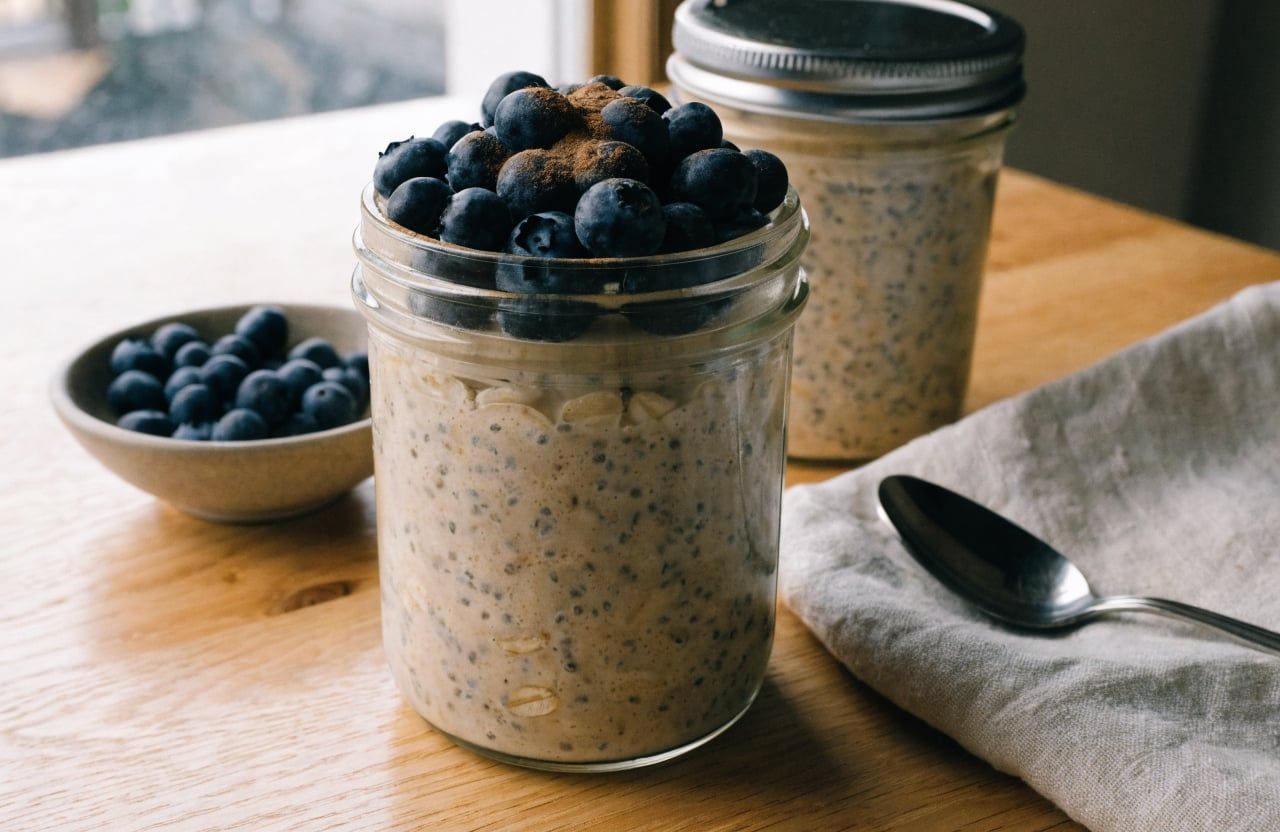
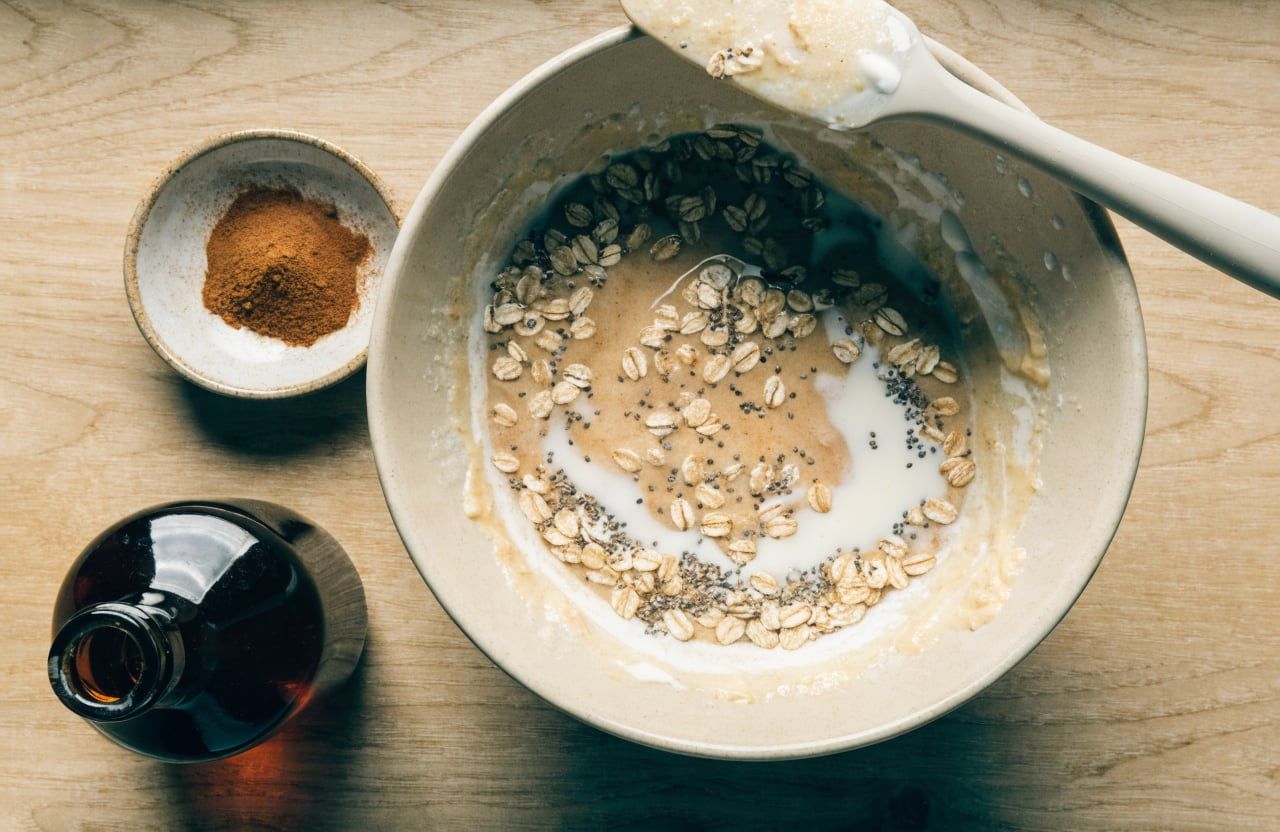
Add the rolled oats and chia seeds and stir with a spatula for about 30 seconds, scraping the bottom of the bowl. The mix should be loose and glossy, with the oats and black chia seeds spread evenly and no dry clumps. It will look too thin. That's correct: the oats and chia drink it overnight.
Divide into jars
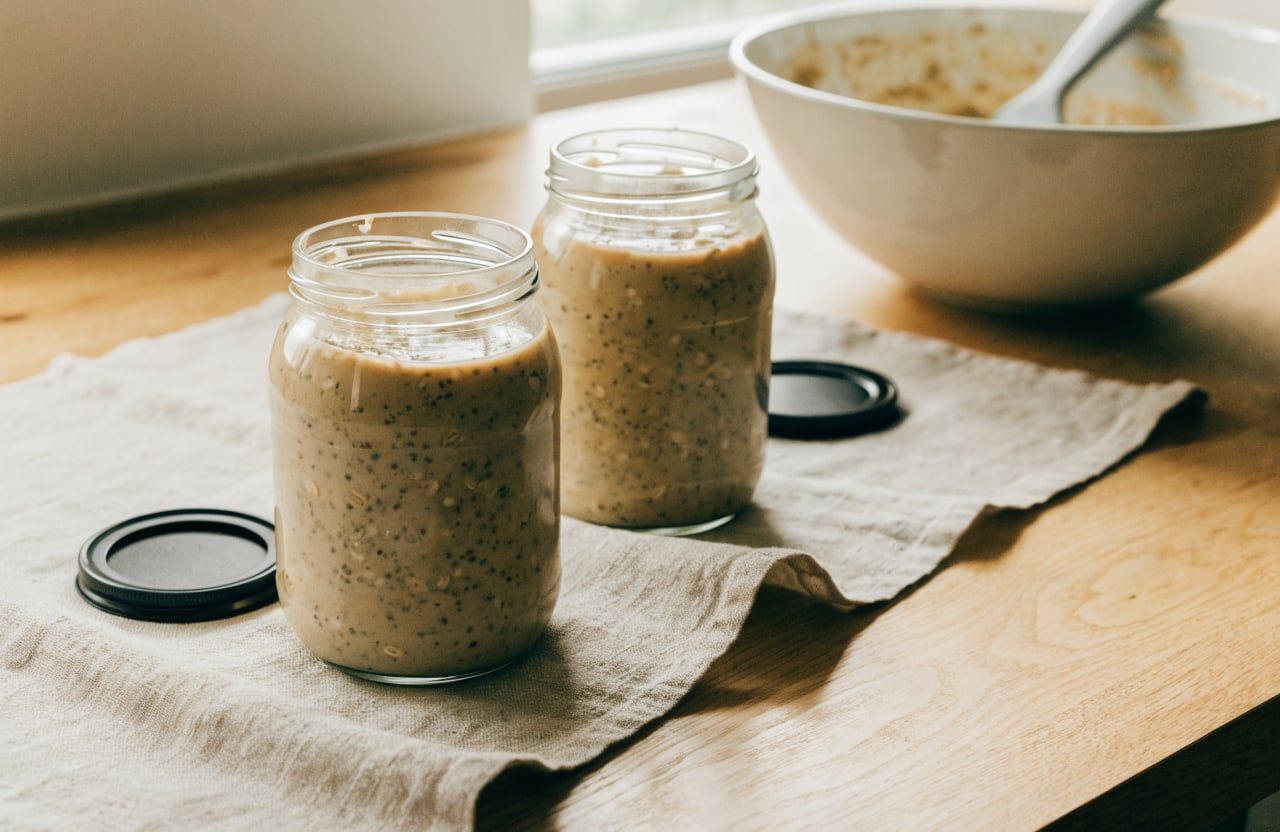
Spoon the mixture into two wide-mouth 16-ounce jars, about 1 3/4 cups in each, leaving a little headspace at the top. Wipe the rims and close the lids. Wide jars matter more than you'd think: you can stir to the bottom in the morning without leaving a dry layer.
Chill at least 6 hours
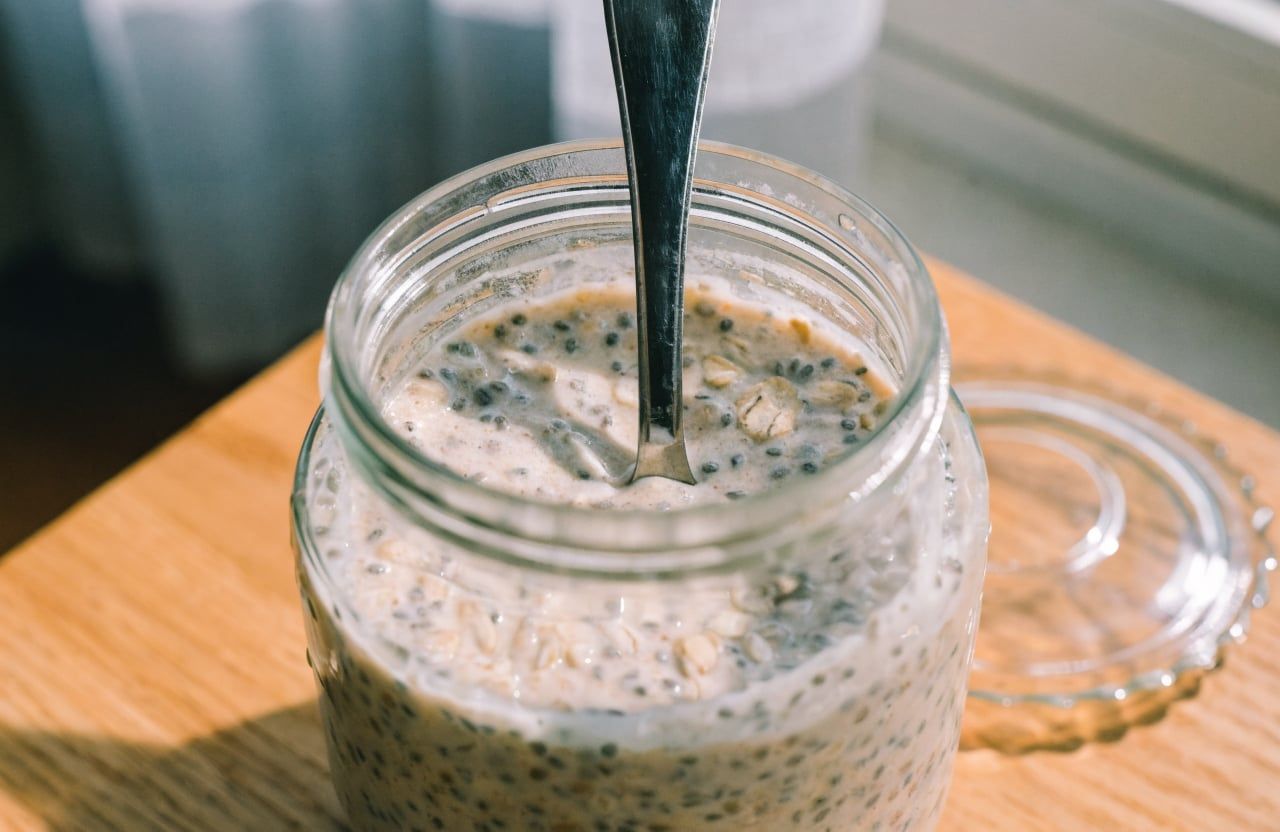
Refrigerate the jars for at least 6 hours, ideally overnight. During that time the oats soften, the chia seeds swell into a gel and the mix thickens to the texture of cheesecake filling. If a spoon pushed into the center stands up for a second before tipping, it's ready.
Stir, loosen and top
In the morning, stir each jar from the bottom up to redistribute any liquid that settled. If it's thicker than you like, stir in 1 to 2 tablespoons of milk. Pile half the blueberries on top of each jar right before eating so they stay firm and bright.
Per serving: 499 kcal · 37 g protein · 70 g carbs · 9 g fat · 10.1 g fiber. Nutrition calculated from USDA FoodData Central.
Mistakes to avoid
Using too little liquid
A full cup of Greek yogurt already makes the jar thick, and chia and oats keep absorbing liquid for hours. Cut the milk and you wake up to a dense block that tastes dry. Keep the half cup of milk per jar and adjust in the morning, not the night before.
Swapping in quick oats
Quick oats are cut thinner and pre-steamed, so after a night in yogurt they dissolve into paste and lose all chew. Old-fashioned rolled oats are the right thickness for a no-cook soak. Steel-cut oats go the other way and stay hard and gritty.
Adding the berries the night before
Berries release juice as they sit, which bleeds purple into the oats and waters down the top layer. They also soften and lose their pop. Add fruit in the morning. If you pack the jars for work, carry the berries in a small separate container.
Skipping the salt
A pinch of salt sounds optional in a sweet breakfast, but Greek yogurt is tangy and oats taste flat without it. Salt rounds out the tang and makes the maple and vanilla read as sweeter, so you don't need to add more syrup.
Variations
Chocolate peanut butter
Whisk 1 tablespoon of unsweetened cocoa powder into each jar's wet base and swirl 1 tablespoon of smooth peanut butter on top before chilling. Skip the blueberries or swap them for a few raspberries. It tastes like a peanut butter cup and protein goes up slightly (about 41 g protein, 564 kcal).
Extra-protein with whey
If you don't mind a little powder, whisk half a scoop (15 g) of vanilla whey into each jar along with 2 extra tablespoons of milk to keep the texture loose. Half a scoop hides behind the yogurt and vanilla. Protein jumps significantly (about 49 g protein, 564 kcal).
Blended cottage cheese base
Replace the Greek yogurt with 2 cups of 1% cottage cheese blended until completely smooth. It's milder and less tangy than yogurt, a little saltier, and sets just as thick. Protein climbs and the flavor gets closer to cheesecake (about 41 g protein, 528 kcal).
Storage
- Fridge
- Keep the jars covered in the fridge for up to 4 days. The oats soften a little more each day, so the first two days have the most chew. Add fruit only when you eat them.
- Freezer
- You can freeze the jars without toppings for up to 1 month, leaving an inch of headspace. Thaw overnight in the fridge and stir well, since the yogurt can look slightly grainy until it's mixed.
- Reheat
- They're meant to be eaten cold. If you want them warm, microwave in 20-second bursts, stirring between each, just until the chill is gone. Heating the yogurt past warm makes it separate and turn grainy.
FAQ
How do you add protein to overnight oats without protein powder?
Use Greek yogurt as the main liquid instead of milk alone. One cup of nonfat Greek yogurt adds about 23 grams of protein, far more than any other no-powder option. Blended cottage cheese works the same way. Chia seeds, hemp hearts and a spoonful of peanut butter each add a few more grams, and high-protein or ultra-filtered milk helps too.
How much protein is in regular overnight oats?
A standard jar made with 1/2 cup rolled oats, 1/2 cup milk and a spoonful of chia has about 10 to 12 grams of protein. Most of it comes from the oats and the milk. This recipe keeps the same oats and milk but adds a full cup of Greek yogurt per jar, which is why it reaches 37 grams.
Can you eat overnight oats cold?
Yes, overnight oats are designed to be eaten cold, straight from the fridge. The oats soften by soaking, not cooking, so there's no need to heat them. Rolled oats are safe to eat without cooking. If you prefer them warm, microwave in short bursts and stir between each so the yogurt doesn't separate.
How long do high protein overnight oats last in the fridge?
Up to 4 days in a sealed jar. Greek yogurt and milk keep them fresh for that long, but the texture changes as the oats keep absorbing liquid, so day four is softer than day one. Store them without fruit, and stir in a splash of milk if they've thickened too much.
Why are my overnight oats too thick?
The oats and chia kept absorbing liquid after you mixed them, or the yogurt you used is extra thick. Stir in 1 to 2 tablespoons of milk right before eating and they loosen up in seconds. For the next batch, keep the full half cup of milk per jar and make sure the chia is measured level, not heaping.