Proats: Egg White Oatmeal That Tastes Like Cake Batter (34g Protein)
It's 9:50 a.m. and the bowl of oatmeal you ate at seven is a memory. It was warm, it was filling for about an hour, and it had roughly 6 grams of protein, which is why your stomach is already asking about lunch.
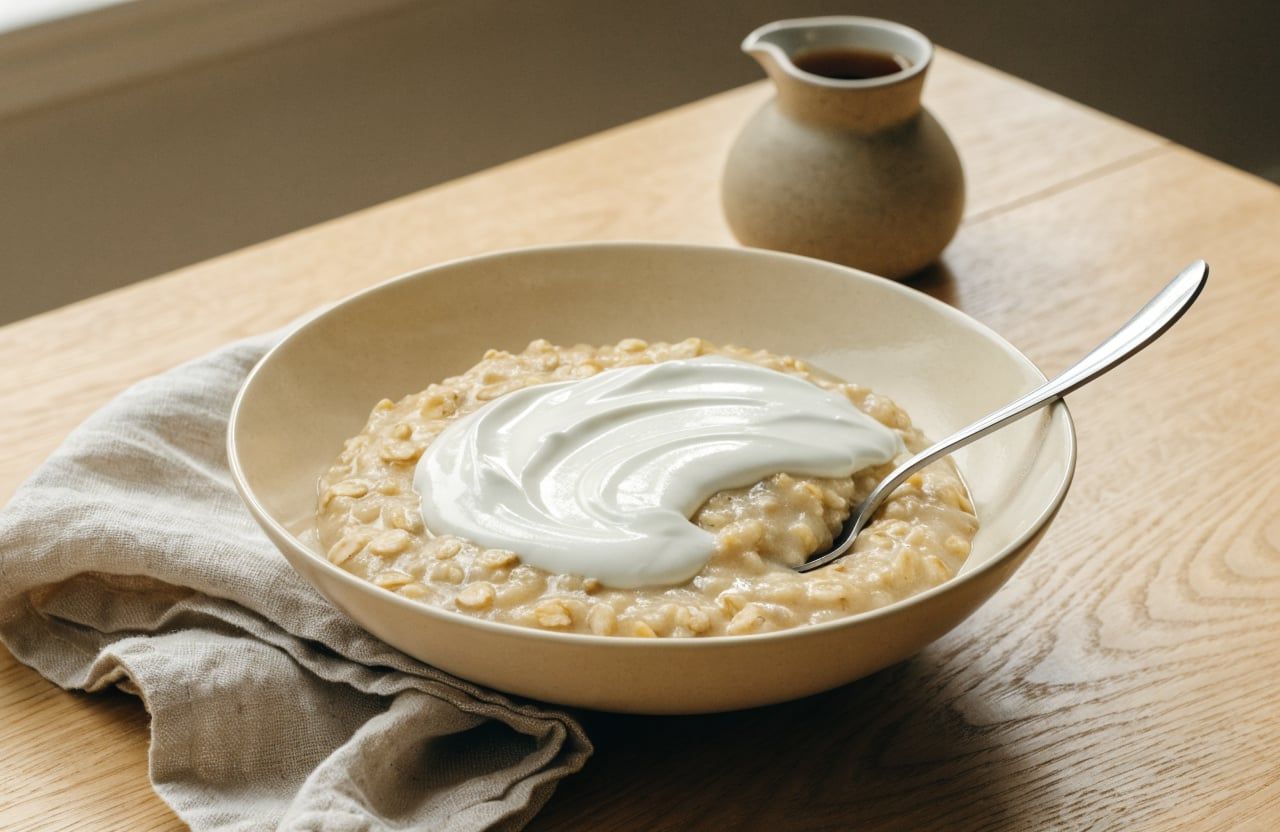
Proats fix that with an ingredient you won't taste: egg whites, whisked into the oats in the last minutes on the stove. They cook into the porridge and turn it thick, fluffy and almost custardy. Vanilla, a little butter and a Greek yogurt frosting make it taste like cake batter, and the bowl has 34 grams of protein for 440 calories.
It takes ten minutes and one saucepan. The only trick is how you add the whites, and that's exactly what the steps below cover.
Why it works
Egg whites add protein you can't taste
Half a cup of liquid egg whites brings about 13 grams of protein and only 63 calories, with almost no flavor of their own. The oats and milk add another 13, and the Greek yogurt frosting adds nearly 8, which is how an ordinary-looking bowl of oatmeal reaches 34 grams.
One pot, ten minutes
The oats simmer for about 5 minutes, the whites go into the same pot and cook for 2 to 3 more, and the flavorings are stirred in off the heat. You make the frosting while the oats simmer, so nothing waits on anything else and there's one pan to wash.
Fluffy instead of scrambled
When the whites are poured slowly into hot, starchy porridge and kept moving, they don't clump into curds. They spread through the oats and set as a fine network that traps steam, so the oatmeal puffs up and turns light. Butter and vanilla stirred in at the end give it the cake batter taste.
Nutrition per serving
- Calories
- 440 kcal
- Protein
- 34 g
- Carbs
- 53 g
- Fat
- 9 g
- Fiber
- 4.2 g
Nutrition calculated from USDA FoodData Central
Recipe
Proats: Egg White Oatmeal That Tastes Like Cake Batter (34g Protein)
Protein in this batch: 34 g
Equipment
- Small saucepan (1 1/2 to 2 quarts)
- Whisk
- Silicone spatula
- Liquid measuring cup
- Small bowl
- Instant-read thermometer (optional)
Ingredients
Rolled oats turn creamy but keep some chew in 5 minutes. Quick oats work if you cut the first simmer to 2 minutes. Steel-cut oats need 20 minutes and more liquid, so they don't fit this method.
Carton egg whites are pasteurized and pour in an even stream. If you separate your own, you need about 4 large egg whites, whisked well so there are no thick, jelly-like strands.
It's only a teaspoon, but butter plus vanilla is what makes this taste like cake batter instead of plain porridge. Don't skip it.
Instructions
Simmer the oats
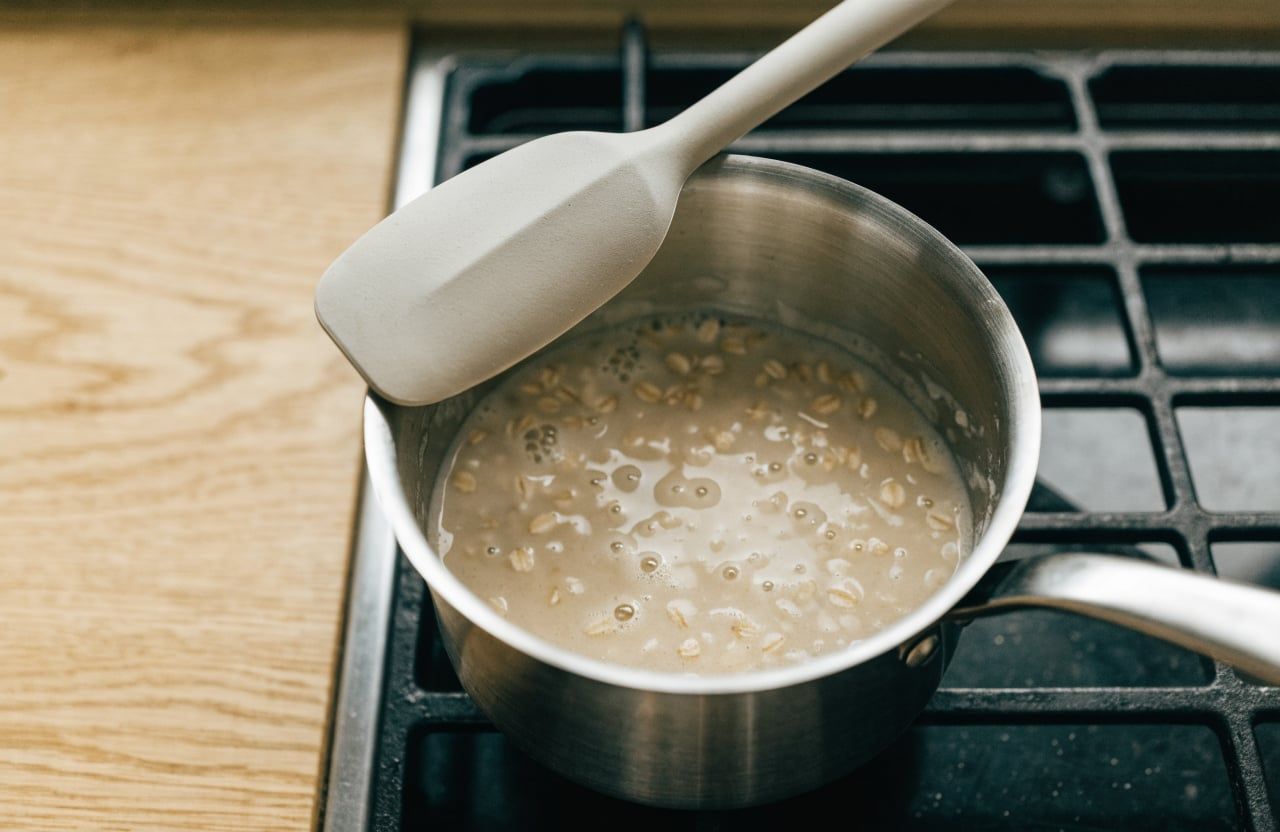
Combine the oats, milk, water and salt in a small saucepan over medium heat. Bring to a gentle simmer, stirring every 30 seconds so the milk doesn't catch on the bottom, and cook for 4 to 5 minutes. The oats are ready when they're tender and creamy but still loose: the porridge should slowly slide back into place when you drag the spatula through it.
Whisk the whites and mix the frosting
While the oats simmer, whisk the egg whites in a liquid measuring cup for about 20 seconds, until they're loose and slightly foamy with no thick strands. In a small bowl, stir the Greek yogurt with 1 teaspoon of the maple syrup and 1/4 teaspoon of the vanilla until smooth and glossy, like a soft frosting. Set both next to the stove.
Take the pot off the heat, then stream in the whites
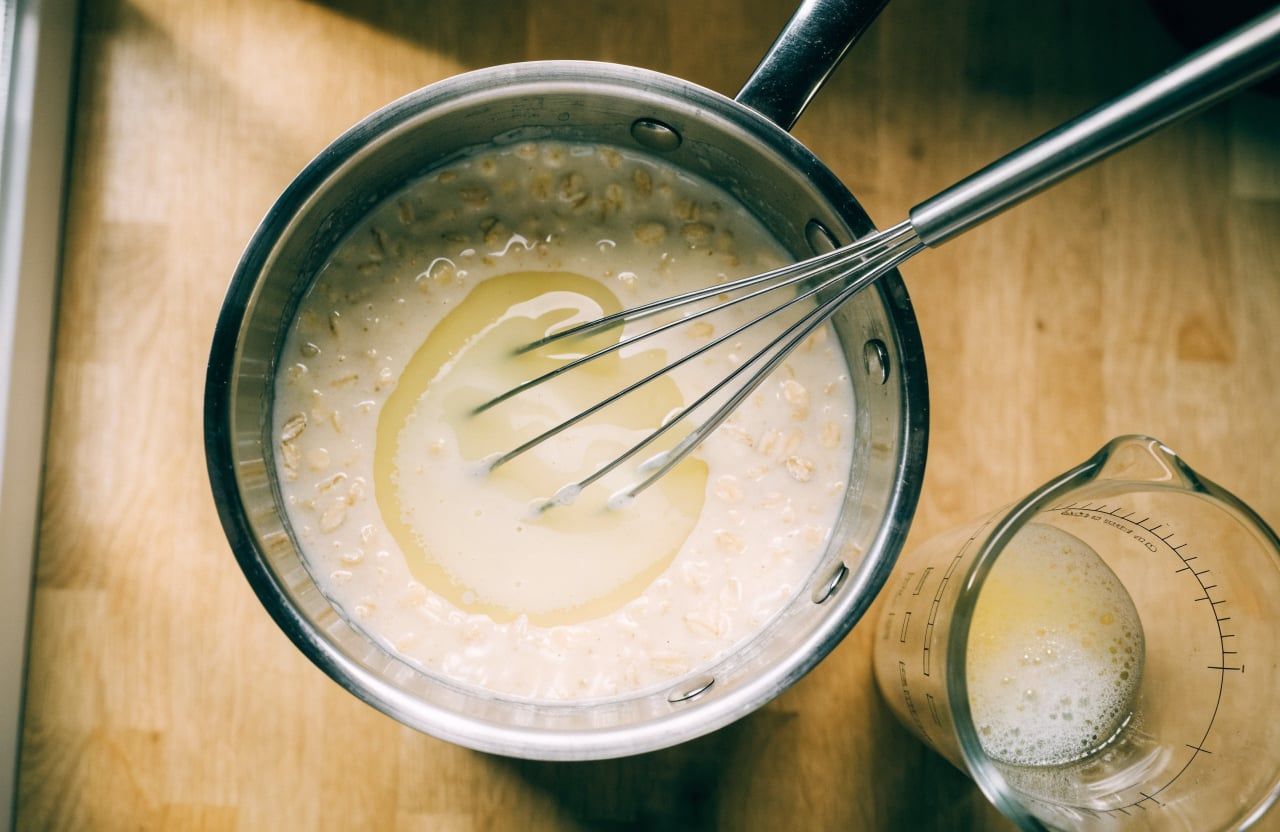
Move the saucepan off the burner and wait about 30 seconds, until the bubbling stops. Pour the egg whites in a thin, steady stream with one hand while you whisk constantly with the other, reaching into the edges of the pot. The oatmeal will look loose, glossy and pale, almost soupy. That's correct; nothing has set yet.
Cook low and keep stirring
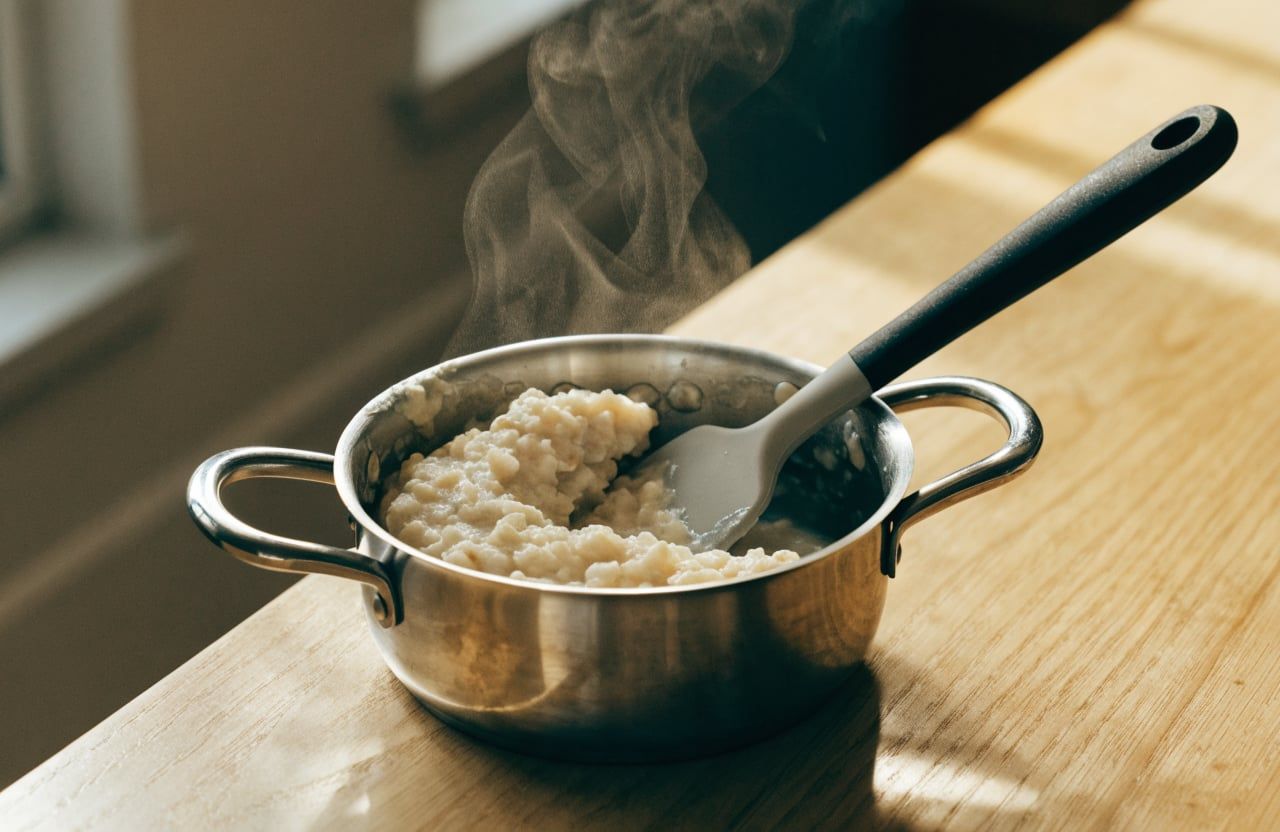
Return the pan to low heat and switch to a silicone spatula. Stir constantly, scraping the bottom and corners, for 2 to 3 minutes. The oatmeal thickens, turns opaque and noticeably fluffier, and starts to pull away from the pan in a soft mass. It's done when no glossy or clear streaks remain and it's steaming steadily, or reads 160°F (71°C) on an instant-read thermometer.
Flavor it off the heat
Take the pan off the heat and stir in the butter, the remaining 2 teaspoons of maple syrup and the remaining 3/4 teaspoon of vanilla. The butter melts into glossy streaks that disappear in a few stirs, and the kitchen starts to smell like a mixing bowl of cake batter. Adding the vanilla now, not during cooking, keeps its aroma from cooking off.
Frost and eat right away
Spoon the proats into a bowl, drop the yogurt frosting in the center and swirl it with the back of the spoon so it runs in white ribbons across the top. Eat it while it's hot. The fluffy texture comes from steam trapped in the set whites, and it slowly settles and firms as the bowl cools.
Per serving: 440 kcal · 34 g protein · 53 g carbs · 9 g fat · 4.2 g fiber. Nutrition calculated from USDA FoodData Central.
Mistakes to avoid
Adding the whites to bubbling oats
Egg whites start setting at around 145°F, and a simmering pot is far hotter. Whites that land on bubbling porridge or the hot bottom of the pan set on contact into white, rubbery curds. Thirty seconds off the heat is enough to stop the bubbling and give you time to whisk them in evenly.
Pouring all at once and stirring slowly
A big splash of whites forms a pocket that cooks faster than it mixes, and a lazy spoon lets strands set along the bottom. Pour in a thin stream, whisk the whole time, and switch to a spatula once they're in so you can scrape the corners where scrambled bits usually start.
Stopping while it's still glossy
Glossy, translucent streaks are raw egg white. Keep stirring on low until the oatmeal is opaque all the way through and steaming, or reaches 160°F (71°C), the temperature at which egg dishes are considered fully cooked. It only takes a minute longer, and undercooked whites also taste slick and eggy.
Cooking it on high to finish faster
Once the whites are in, medium-high heat tightens them past fluffy into rubbery, and the oatmeal can weep liquid at the bottom of the bowl. Low heat and 2 to 3 minutes of stirring is all it takes. When it pulls away from the pan in a soft mass, stop.
Variations
Blueberry muffin proats
Stir 1/2 cup (74 g) of fresh blueberries into the oats during the last minute of cooking, after the whites have set, so they warm through and a few burst into purple streaks. Keep the butter, vanilla and frosting. It tastes like a warm blueberry muffin top (about 34 g protein, 482 kcal).
Chocolate cake batter proats
Whisk 1 tablespoon (5 g) of unsweetened cocoa powder into the milk before the oats go in, and add 1 extra teaspoon of maple syrup at the end to balance the bitterness. The oatmeal turns deep brown and tastes like brownie batter under the white frosting (about 35 g protein, 469 kcal).
Peanut butter proats
Replace the butter with 1 tablespoon (16 g) of smooth peanut butter, stirred in off the heat along with the maple syrup and vanilla. It melts into the oats and makes them richer and nuttier, closer to a peanut butter cookie than a vanilla cake (about 37 g protein, 499 kcal).
Storage
- Fridge
- Proats are best right after cooking. Leftovers keep in an airtight container for up to 3 days, with the frosting stored separately; they firm up and lose some fluffiness.
- Freezer
- We don't recommend freezing them. Thawed egg whites turn spongy and weep water, and the oatmeal comes back dense and wet.
- Reheat
- Add 2 tablespoons of milk and microwave in 30-second bursts, stirring between each, until steaming hot all the way through, about 1 1/2 minutes. Add the frosting after reheating.
FAQ
What are proats?
Proats is short for protein oats: oatmeal with an added protein source that pushes it well past the 5 to 7 grams in a regular bowl. The most common versions use egg whites cooked into the oats, like this one, or protein powder stirred in at the end. Egg whites add volume and a fluffy texture; powder adds flavor and sweetness.
Can you taste the egg whites in proats?
No, not when they're cooked this way. Egg whites have very little flavor, and once they're spread through the oats and fully set, they read as a thicker, fluffier oatmeal rather than as egg. If you notice an eggy taste, the whites were likely undercooked or scrambled into visible pieces. Vanilla and a little butter cover any trace.
Are the egg whites in proats fully cooked?
Yes, as long as you keep cooking after they go in. Stir on low heat for 2 to 3 minutes until the oatmeal is opaque, fluffy and steaming, with no glossy streaks, or until it reaches 160°F (71°C) on an instant-read thermometer. Using pasteurized carton egg whites adds an extra margin of safety.
Can you make proats with protein powder instead of egg whites?
Yes, but the method changes. Cook the oats in the full cup of milk and water, take them off the heat, let them cool for a minute and stir in half a scoop of whey, which adds about 12 grams of protein. Never boil it: whey clumps in bubbling liquid. The texture stays like regular oatmeal, without the fluffy lift egg whites give.
How do you make proats in the microwave?
Microwave the oats, milk, water and salt in a large bowl for 2 minutes. Whisk in the egg whites in a thin stream, then microwave in 30-second bursts, stirring well between each, until the oatmeal is fluffy, opaque and steaming, usually 1 1/2 to 2 minutes. The stirring breaks up the edges, which set first. Then add the butter, vanilla and maple.