Lemon Garlic Baked Cod (36g Protein, Ready in 20 Minutes)
You bought cod because it's lean, reasonably priced for fish and everyone at the table will eat it. Then it comes out of the oven pale, sitting in a puddle of water, tasting of almost nothing, and the lemon wedge on the side can't rescue it.
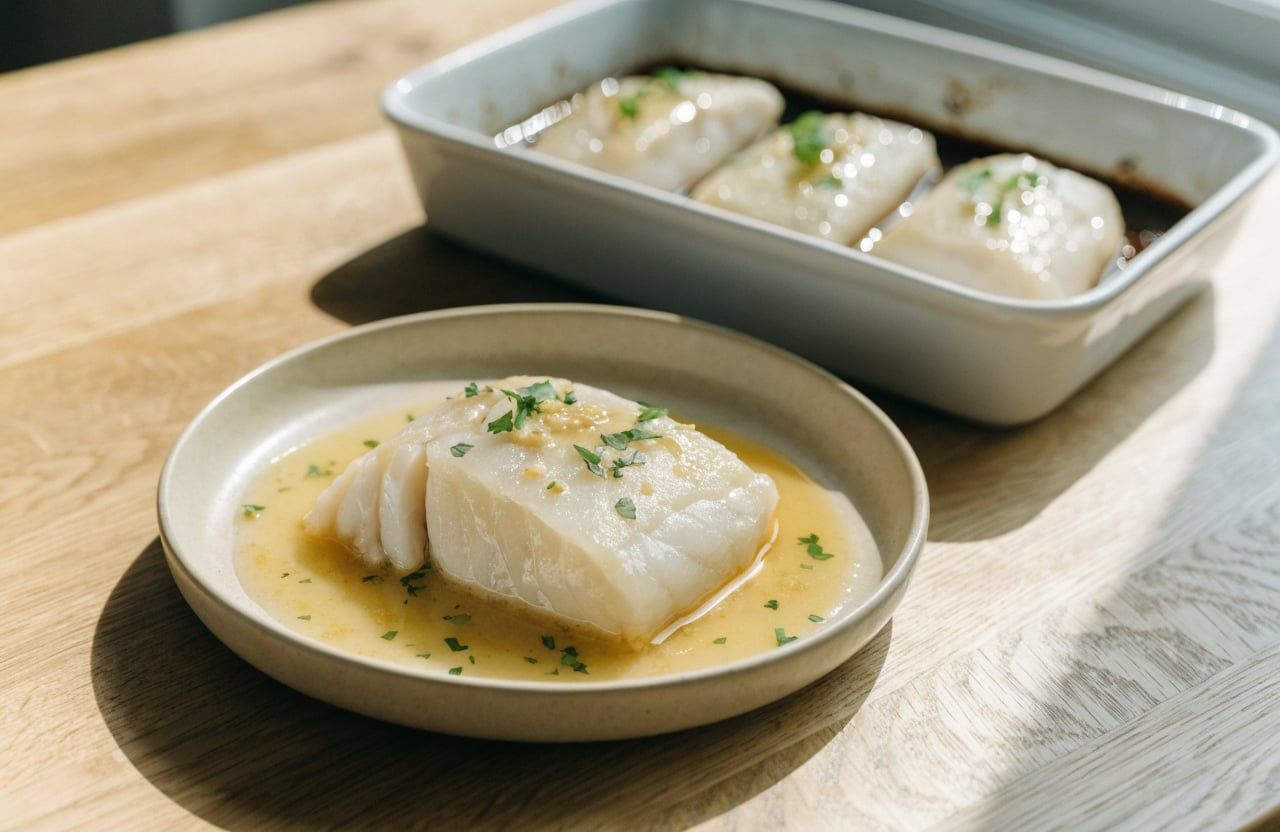
Cod is mild, so it needs a sauce that goes on before it bakes. Here that's butter warmed with garlic, then lemon zest, lemon juice and parsley stirred in. The fillets bake in it, and the juices they release turn into a sauce at the bottom of the dish. One fillet has 36 grams of protein and about 250 calories.
Five ingredients plus salt and pepper, 5 minutes of prep and about 12 in the oven. Here's how to pull it out at the right moment.
Why it works
A full fillet, not a sliver
Atlantic cod has about 18 grams of protein per 100 grams raw and almost no fat. A 7-ounce fillet, a normal size at the fish counter, delivers 35 grams on its own for around 160 calories, which leaves room for real butter in the sauce and still lands near 250 per plate.
One dish, no flipping
Delicate white fish tears when you flip it in a skillet. In the oven, heat reaches it from every side at once, so you arrange the fillets, spoon on the butter and walk away. The sauce comes together in one small pan while the oven heats.
The fish builds its own sauce
As cod bakes, it releases juices that mix with the lemon garlic butter in the dish. Spooned back over the fillets at the end, that liquid carries garlic and lemon into every flake. Zest brings lemon aroma without much extra acid, so the flavor is bright rather than sour.
Nutrition per serving
- Calories
- 246 kcal
- Protein
- 36 g
- Carbs
- 2 g
- Fat
- 10 g
- Fiber
- 0.2 g
Nutrition calculated from USDA FoodData Central
Recipe
Lemon Garlic Baked Cod (36g Protein, Ready in 20 Minutes)
Protein in this batch: 144 g
Equipment
- 9x13-inch baking dish
- Small saucepan
- Zester or Microplane
- Instant-read thermometer
- Paper towels
- Wide spatula
Ingredients
Atlantic or Pacific cod both work; Pacific is a little softer, with smaller flakes. Look for fillets close to 1 inch thick at the center. Frozen fillets are fine: thaw them overnight in the fridge and press off the extra water with paper towels.
Butter gives the sauce its body and helps it cling to the fish. Unsalted works too; add an extra pinch of salt. For a dairy-free version, see the olive oil variation.
Zest the lemon first, then cut it and squeeze it: one medium lemon gives you both the zest and the juice. Bottled juice tastes flat next to fresh here.
Instructions
Heat the oven and even out the fillets
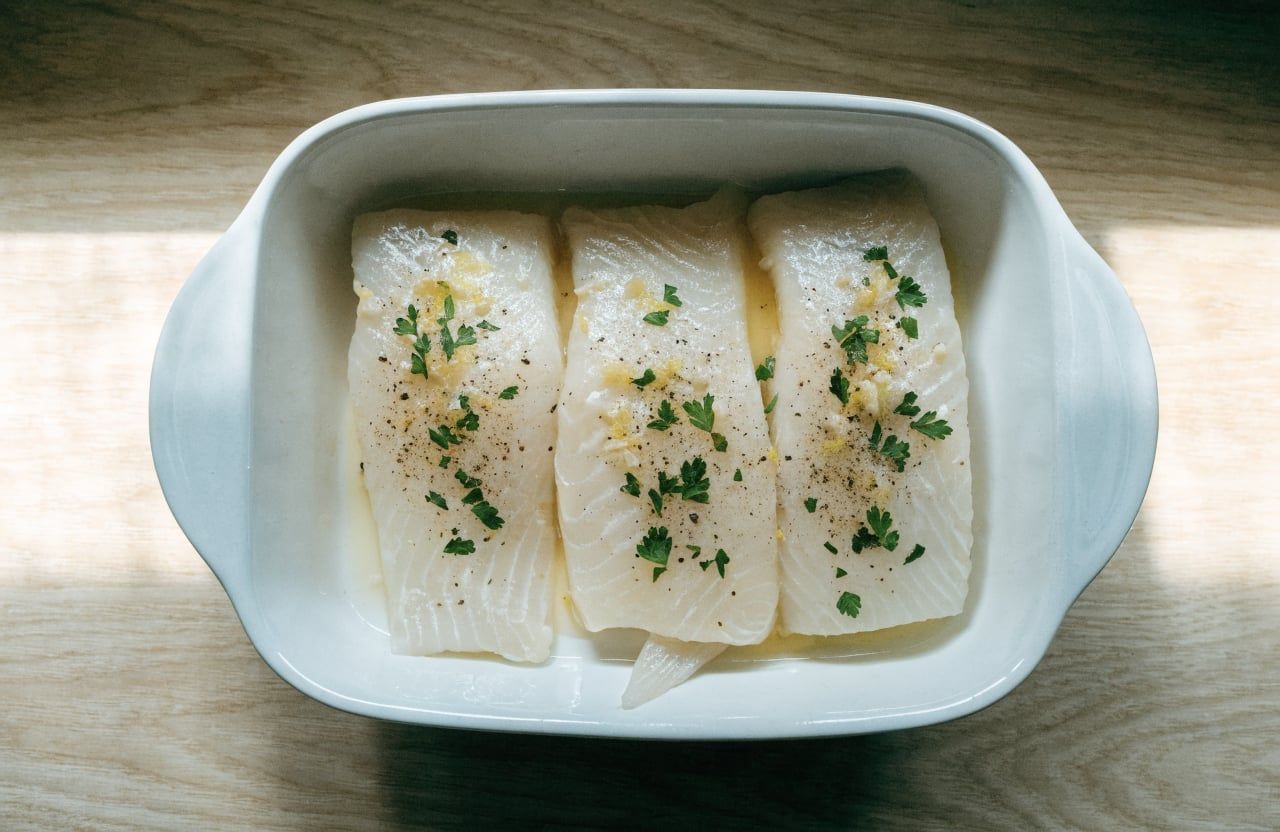
Heat the oven to 400°F (200°C). Pat the cod dry on both sides with paper towels and run a fingertip along each fillet to check for pin bones. If a fillet tapers to a thin tail, fold the last 2 inches under itself so the whole piece is about the same thickness. Set the fillets in a 9x13-inch baking dish with a little space between them.
Make the lemon garlic butter
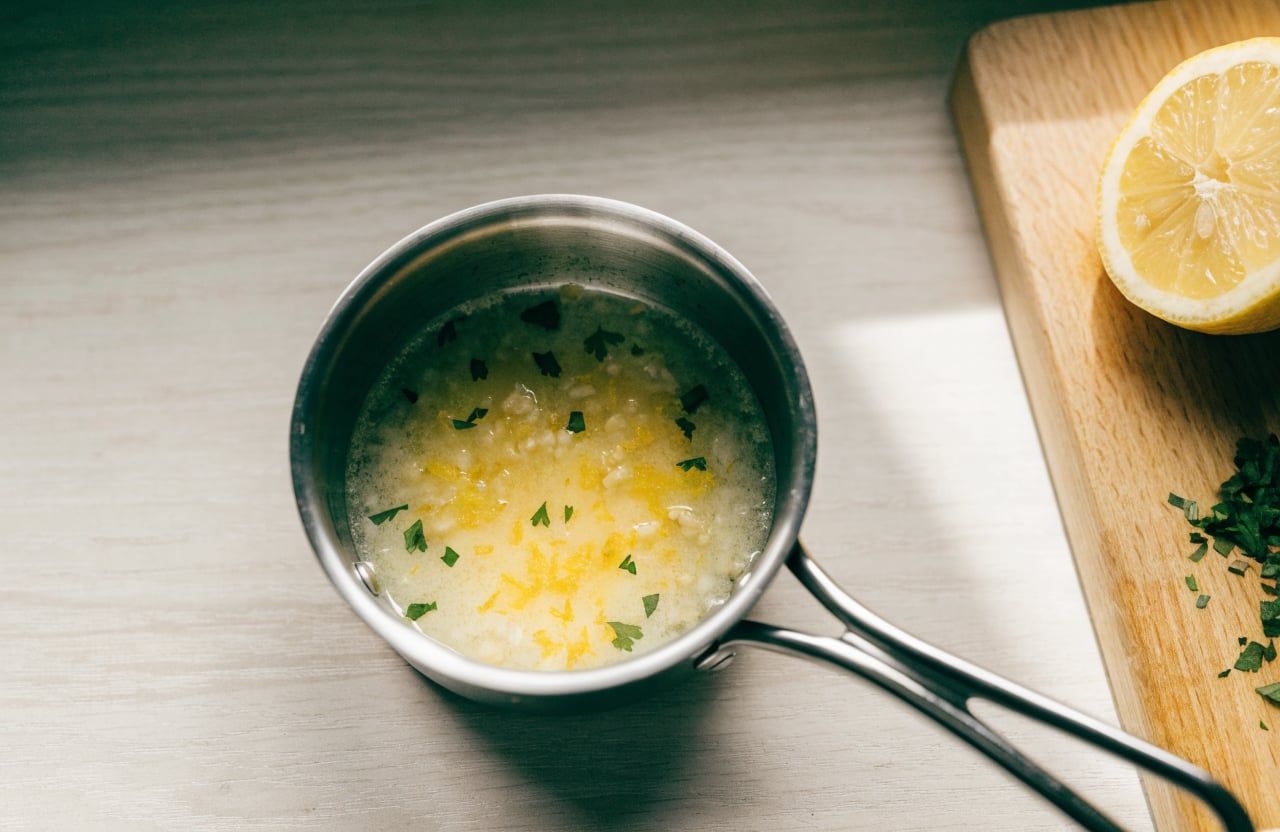
Melt the butter in a small saucepan over low heat. Add the minced garlic and cook, stirring, for 1 to 2 minutes, until it smells sweet and turns soft but is still pale, not golden. Take the pan off the heat and stir in the lemon zest, lemon juice and half the parsley. The butter will look loose and speckled green and yellow.
Season the fish and spoon on the butter
Sprinkle the salt and pepper over both sides of each fillet. Spoon about two-thirds of the lemon garlic butter over the fish, pushing the garlic and zest onto the tops so they stay on the fillets instead of sliding into the dish. Keep the rest of the butter in the saucepan for the end.
Bake until it flakes
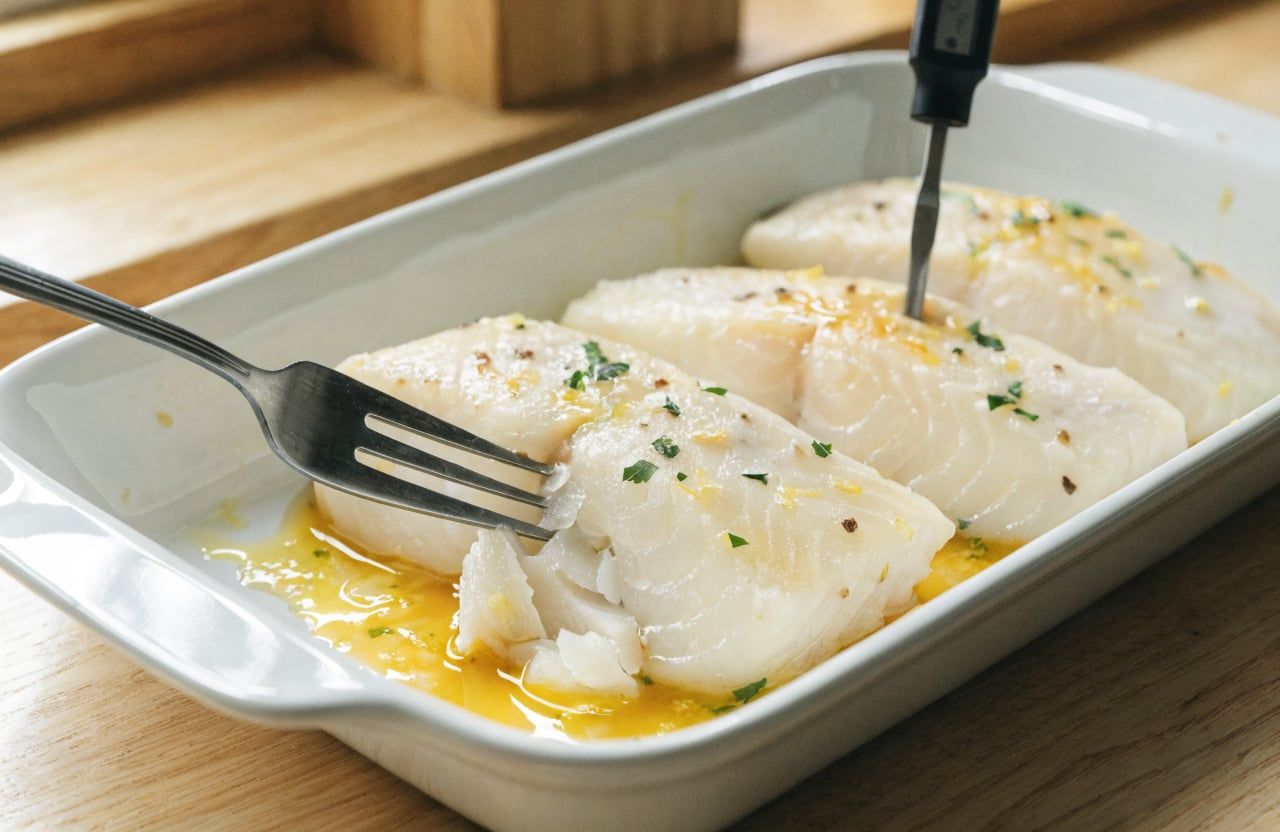
Bake uncovered for 10 to 14 minutes, starting to check at 10. Press a fork into the thickest part and twist gently: the cod is done when it's opaque white all the way through, separates into large moist flakes, and an instant-read thermometer reads 145°F (63°C). If the center still looks glassy and translucent, give it 2 more minutes.
Baste and serve
Tilt the dish and spoon the pan juices, now a thin, lemony butter sauce, back over each fillet. Warm the reserved butter for a few seconds if it has firmed up, drizzle it on top and scatter the rest of the parsley. Lift each fillet out with a wide spatula and serve right away with plenty of the sauce spooned over.
Per serving: 246 kcal · 36 g protein · 2 g carbs · 10 g fat · 0.2 g fiber. Nutrition calculated from USDA FoodData Central.
Mistakes to avoid
Waiting for it to brown
Cod baked at 400°F doesn't turn golden. It goes from glassy and translucent to bright, opaque white. If you wait for color on top, you've overshot by several minutes and the flakes turn dry and stringy. Judge by the flake test and the thermometer, not the surface.
Browning the garlic
Garlic in hot butter goes from fragrant to bitter in seconds, and it keeps cooking on top of the fish in the oven. Melt the butter over low heat, cook the garlic only until it smells sweet and softens, and take it off the heat while it's still pale.
Baking in a pan that's too big
On a large sheet pan, the butter and fish juices spread thin, scorch at the edges and leave nothing to spoon over the fillets. A 9x13-inch baking dish that holds the four fillets with a little room between them keeps the sauce pooled where you need it.
Leaving the thin tail flat
Cod fillets often taper to a thin tail that cooks in half the time of the thick end, so by the time the center is done the tail is chalky. Folding the last 2 inches under before baking evens out the thickness and lets the whole fillet finish at the same moment.
Variations
Parmesan crumb topping
Mix 1/4 cup (20 g) of grated Parmesan with 2 tablespoons (15 g) of plain dry breadcrumbs and press it onto the buttered fillets before baking. It turns golden and crisp in the same 12 minutes and adds a salty crust. It's no longer gluten-free (about 38 g protein, 280 kcal).
Cherry tomatoes and capers
Scatter 2 cups (300 g) of halved cherry tomatoes and 2 tablespoons (17 g) of drained capers around the fillets before baking. The tomatoes soften and burst into the lemon butter, turning it into a chunkier, briny pan sauce that's good over rice or potatoes (about 37 g protein, 260 kcal).
Olive oil instead of butter
Replace the butter with 3 tablespoons (40 g) of extra-virgin olive oil, warmed gently with the garlic the same way. The sauce is thinner and fruitier, the dish becomes dairy-free, and saturated fat drops by about 70 percent while protein holds (about 36 g protein, 260 kcal).
Storage
- Fridge
- Keep leftover cod with its sauce in an airtight container for up to 3 days. It's best within the first day or two, while the flakes are still moist.
- Freezer
- You can freeze cooked cod for up to 2 months, but it thaws softer and a little watery. It's better to freeze raw fillets and bake them fresh.
- Reheat
- Reheat covered in a 275°F (135°C) oven for 10 to 15 minutes with a spoonful of the sauce, just until warm. The microwave dries it out quickly; if you use it, go 30 seconds at a time at half power. Cold leftover cod flaked over a salad works too.
FAQ
How long do you bake cod at 400°F?
10 to 14 minutes for fillets about 1 inch thick, uncovered. Thin fillets around 1/2 inch can be done in 8 minutes, and thick loins of 1 1/2 inches may need up to 18. Start checking at 10 minutes: the fish is ready when it flakes easily with a fork and reads 145°F (63°C) in the thickest part.
Should I cover cod with foil when baking?
No, not for this recipe. Uncovered, the butter and lemon reduce slightly into a sauce and the surface of the fish stays pleasantly firm. Foil traps steam, which suits fish baked in parchment packets but here makes the fillets watery and dilutes the sauce. Cover the dish only if you need to hold it warm for a few minutes.
Why is my baked cod mushy or watery?
Usually it's previously frozen fish that wasn't fully thawed or dried, so it releases water as it bakes. Thaw fillets overnight in the fridge, then press them firmly between paper towels. Some frozen cod is also treated with moisture-retaining phosphates, which add liquid; check the label for sodium tripolyphosphate and choose fillets without it when you can.
Is Pacific cod as good as Atlantic cod for baking?
Yes. Pacific cod is slightly softer, with smaller flakes and a milder flavor, and it bakes the same way in the same time. In USDA data it's a little leaner and lower in protein, so a 7-ounce fillet of Pacific cod gives about 31 grams instead of 36. Haddock and pollock also work with this recipe.
Do you have to flip cod when baking it?
No. In the oven, heat reaches the fillet from all sides, so it cooks through without turning. Flipping only risks breaking it, since cooked cod separates into flakes as soon as you lift it. Leave it in the dish, baste it with the pan juices when it comes out, and serve it with a wide spatula.