Air Fryer Salmon Bites With Garlic Yogurt Sauce (44g Protein)
Someone at your table says they don't like salmon. Press a little and it's always the same fillet: thick, pale, dry at the edges, soft and a bit fishy in the middle, eaten out of obligation.
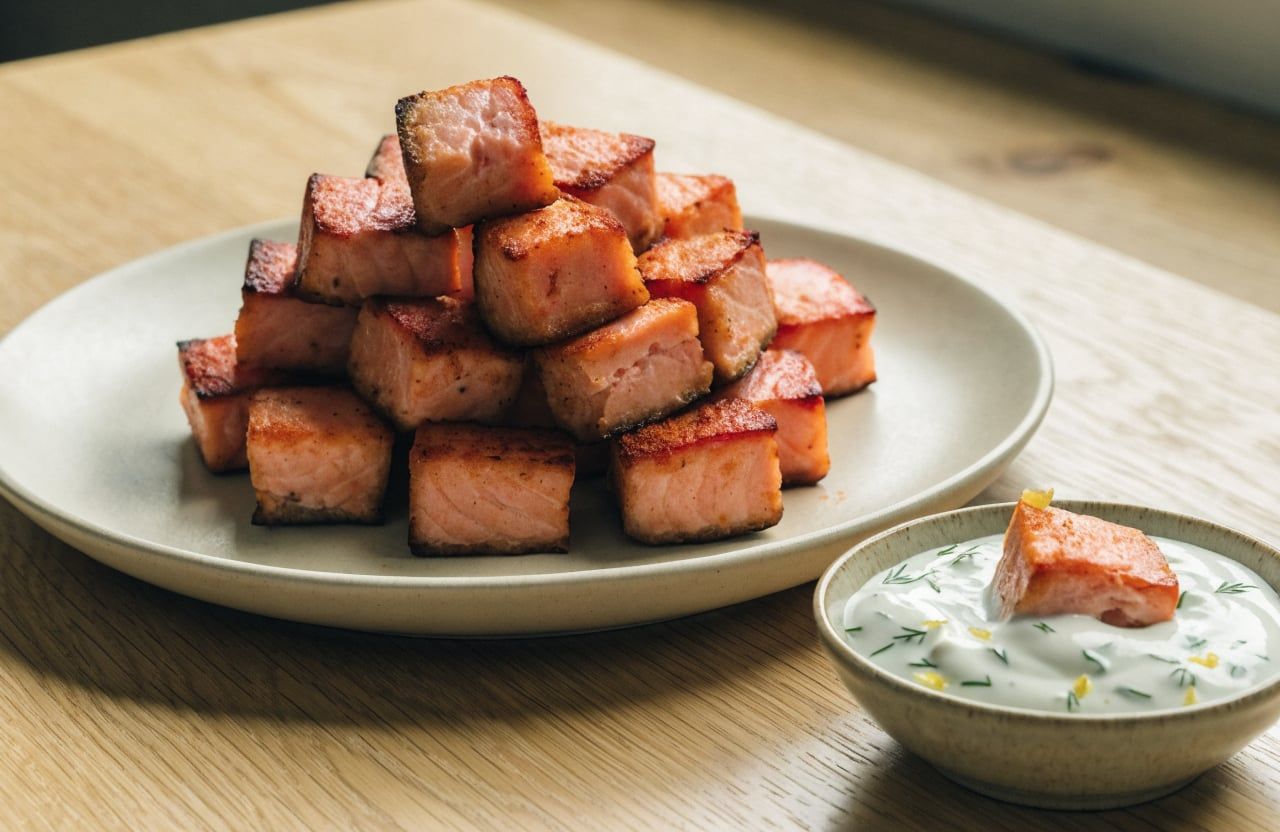
Salmon bites change the shape of the problem. Cut into one-inch cubes, every piece gets browned, smoky edges and a tender center, and each one gets dragged through a cold garlic and dill yogurt sauce. One serving has 44 grams of protein and about 475 calories, and the air fryer needs only 8 minutes.
Here's how to cut, season and cook them so they brown instead of steaming.
Why it works
Six ounces of salmon does the heavy lifting
Raw Atlantic salmon has about 20 grams of protein per 100 grams, so the 6 ounces in each serving supply around 35 grams on their own. The sauce is built on nonfat Greek yogurt instead of mayonnaise, which adds almost 9 more grams where a tartar sauce would add only fat.
Small pieces, short cook
A one-inch cube has the heat reaching its center from six sides at once, so it cooks through in 6 to 8 minutes instead of the 12 or more a thick fillet needs. There's no pan to flip or splatter, and the sauce comes together while the air fryer preheats.
More edge, less fish flavor
Cubing multiplies the surface that touches hot air. The oil and smoked paprika brown on every face and give each bite a savory, slightly smoky crust, which is what people who avoid salmon notice first. Garlic, lemon and dill in the cold sauce cut through the richness of the fish.
Nutrition per serving
- Calories
- 474 kcal
- Protein
- 44 g
- Carbs
- 6 g
- Fat
- 30 g
- Fiber
- 0.7 g
Nutrition calculated from USDA FoodData Central
Recipe
Air Fryer Salmon Bites With Garlic Yogurt Sauce (44g Protein)
Protein in this batch: 88 g
Equipment
- Air fryer (4-quart or larger)
- Instant-read thermometer
- Cutting board and sharp knife
- Mixing bowl
- Small bowl
- Fine grater or Microplane
- Tongs
Ingredients
Farmed Atlantic salmon is what most stores sell and is the most forgiving, because its extra fat keeps the cubes moist. Buy a center-cut piece of even thickness so all the cubes come out the same size. If it has skin, remove it or ask the fish counter to.
Smoked, not sweet paprika. It gives the bites their color and a light grilled flavor. Chili powder works in a pinch.
For the sauce. 2% Greek yogurt makes it creamier and a little less tangy for about 20 more calories per serving.
Instructions
Make the sauce first
In a small bowl, stir together the Greek yogurt, grated garlic, lemon zest, lemon juice, chopped dill, 1 teaspoon of olive oil and a pinch of salt until smooth and flecked with green. Taste it and add more lemon if you like it sharper. Refrigerate it while you cook: 15 minutes is enough for the raw garlic bite to mellow.
Cut even one-inch cubes
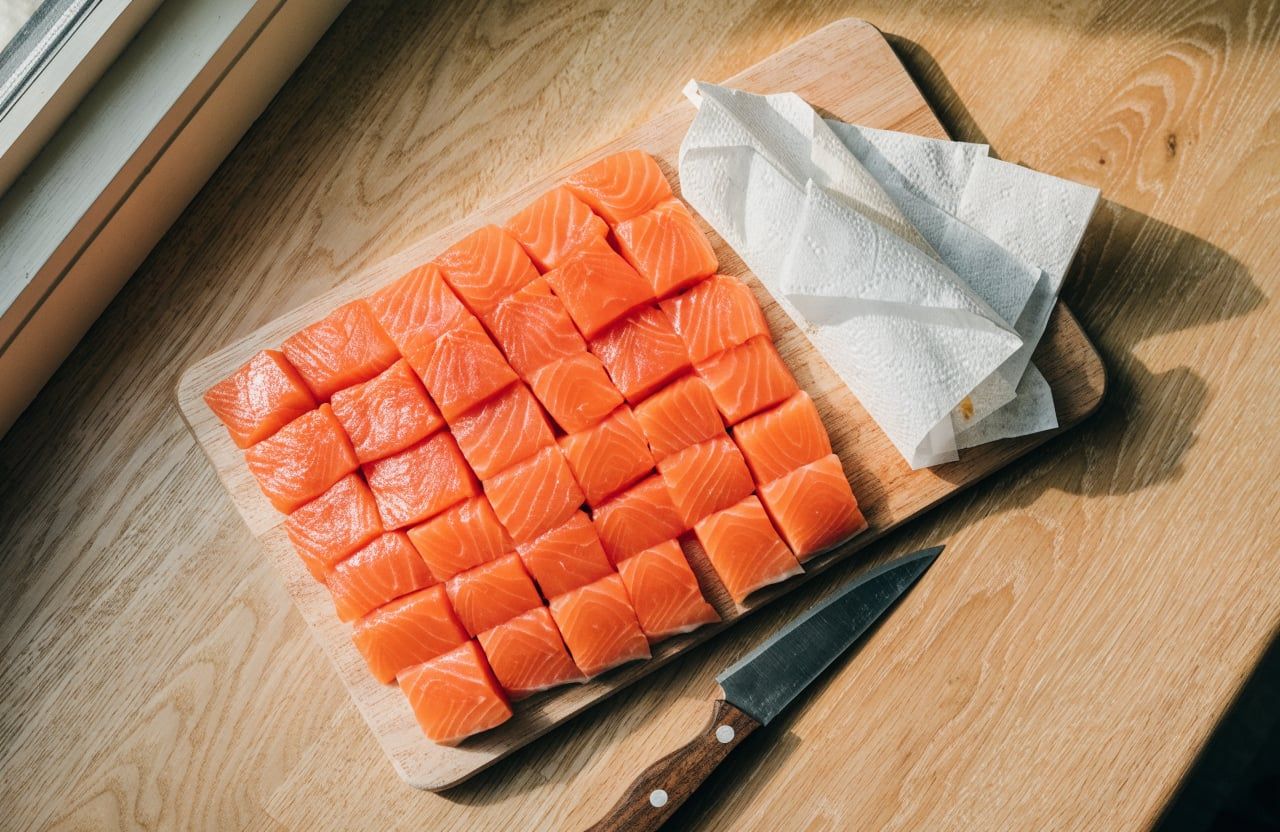
Run your fingertips along the fillet and pull out any pin bones you feel. Cut the salmon into strips 1 inch wide, then across into 1-inch cubes, about 16 to 20 pieces. Keep them as equal as you can, and set aside the thin tail-end scraps to cook together. Pat every cube dry with paper towels.
Season until every side is coated
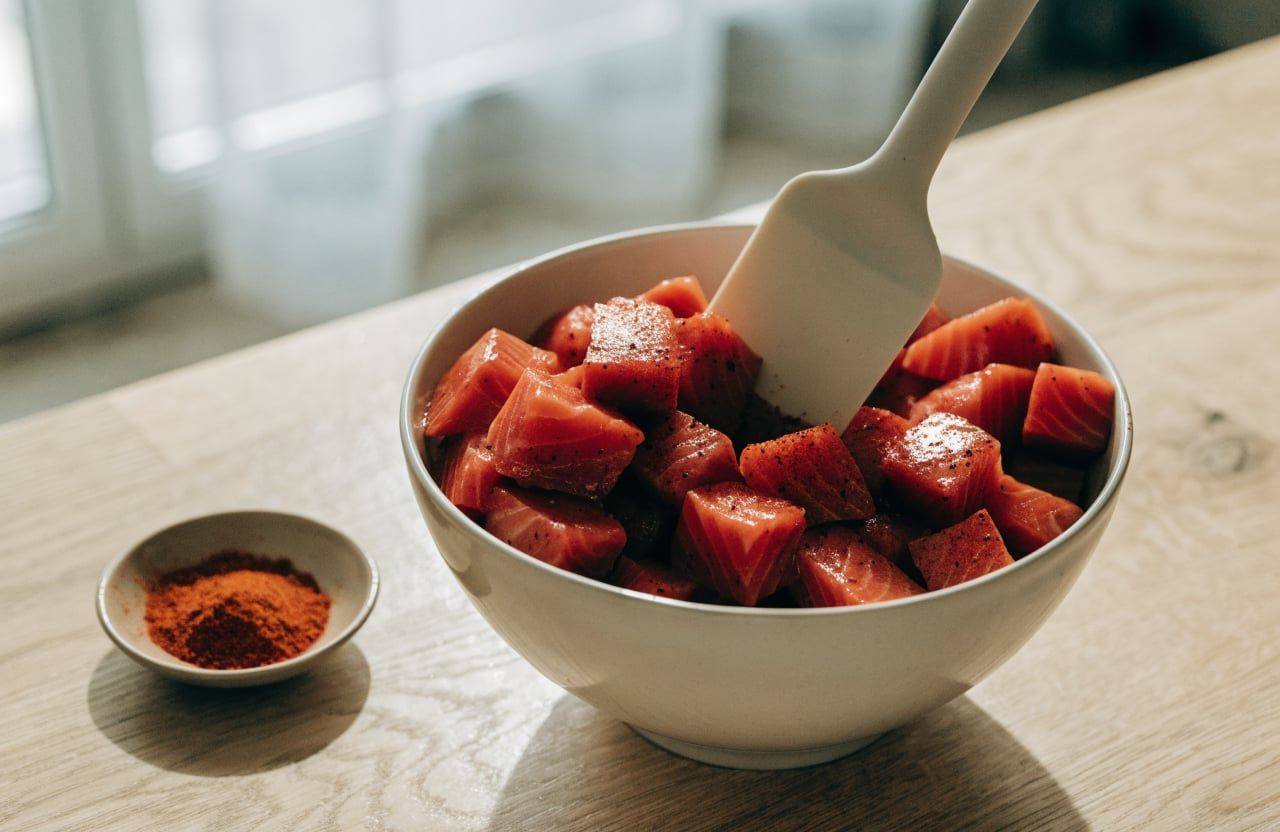
Put the cubes in a mixing bowl with 2 teaspoons of olive oil, the smoked paprika, garlic powder, salt and pepper. Toss gently with your hands or a spatula for 20 to 30 seconds, until every face of every cube is evenly coated in a brick-red, glossy layer with no pale spots. Let them sit while the air fryer heats.
Preheat and spread them out
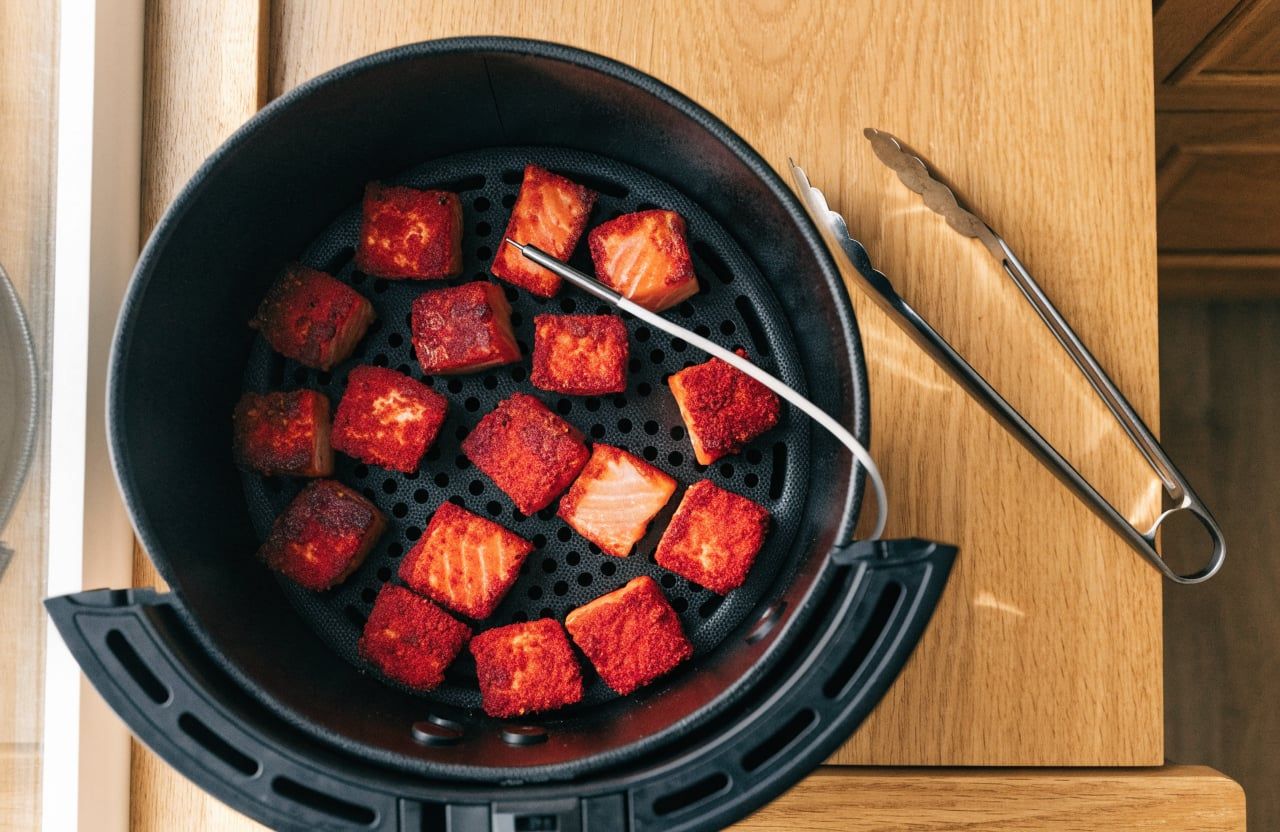
Heat the air fryer to 400°F (200°C) for 3 to 5 minutes. Lightly spray the basket so the fish doesn't stick. Arrange the cubes in a single layer with about half an inch between them. If they don't fit without touching, cook two batches: crowded cubes steam in their own juices and never brown.
Air fry and check the temperature
Cook for 6 to 8 minutes, turning the cubes with tongs at the 4-minute mark. They're done when the edges are browned and slightly crisp, the flesh is opaque and flakes when pressed, and an instant-read thermometer in the thickest cube reads 145°F (63°C), the USDA safe minimum. Some cooks pull salmon earlier for a softer center; that's a personal preference.
Serve them hot with the cold sauce
Pile the bites on a plate right away and serve the sauce on the side for dipping, or spoon it over the top. They're best in the first few minutes, while the edges are still crisp. For a full meal, serve them over rice, a big salad or tucked into lettuce cups with sliced cucumber.
Per serving: 474 kcal · 44 g protein · 6 g carbs · 30 g fat · 0.7 g fiber. Nutrition calculated from USDA FoodData Central.
Mistakes to avoid
Crowding the basket
Salmon releases moisture as it heats. With the cubes packed together, that moisture has nowhere to go, so they steam, turn pale and stick to each other. Leave space around every piece and cook in two batches if you have to. The second batch takes a minute less because the basket is already hot.
Skipping the paper towels
Wet fish won't brown. Water on the surface has to evaporate before the crust can form, and by then the center is overcooked. It also makes the oil and spices slide off into the bottom of the bowl. Thirty seconds of patting dry is the difference between golden and gray.
Cutting uneven pieces
A half-inch piece is done in four minutes and a one-and-a-half-inch piece needs nine. Cooked together, the small ones dry out while you wait for the big ones. Cut from a center-cut fillet, keep the cubes to one inch, and cook the thin tail scraps separately or pull them early.
Cooking by the clock alone
Air fryers run hot or cool, and fillets vary in fat. Start checking at 6 minutes. White beads of protein oozing from the sides mean the fish is past done and drying out. A thermometer reading of 145°F (63°C) in the thickest cube is the reliable signal to stop.
Variations
Honey sriracha bites
Cook the bites as written, then toss them in a warm mix of 1 tablespoon of honey and 1 tablespoon of sriracha right out of the basket. The glaze turns glossy and sticky and plays well against the cool garlic yogurt. It adds a little sugar and some heat (about 44 g protein, 515 kcal).
Wild sockeye salmon
Use 12 ounces of wild sockeye instead of farmed Atlantic. Sockeye is deeper red, firmer and much leaner, so it dries out faster: start checking at 5 minutes. Protein rises and calories drop by more than a quarter (about 47 g protein, 345 kcal).
Cajun bites with lime sauce
Swap the smoked paprika, garlic powder and salt for 2 teaspoons of salt-free Cajun seasoning plus 1/4 teaspoon of salt, and use lime juice and zest instead of lemon in the sauce. The bites come out spicier and darker. Macros stay practically the same (about 44 g protein, 475 kcal).
Storage
- Fridge
- Store cooled bites and the sauce in separate airtight containers for up to 3 days. The sauce keeps its texture; the bites lose their crisp edges but stay tender.
- Freezer
- Freeze cooked bites in a single layer, then transfer to a freezer bag for up to 2 months. They come out a little drier. The yogurt sauce doesn't freeze well, so make it fresh.
- Reheat
- Reheat in the air fryer at 350°F (175°C) for 3 to 4 minutes, until hot through, which brings back some of the crust. The microwave works but toughens them. They're also good cold over a salad.
FAQ
How long do you cook salmon bites in the air fryer?
6 to 8 minutes at 400°F (200°C) for 1-inch cubes, turning them once halfway through. Smaller pieces or lean wild salmon can be done in 5 minutes, and a crowded basket takes longer. Time is only a guide: check the thickest cube with an instant-read thermometer and stop at 145°F (63°C).
What temperature should salmon bites reach?
145°F (63°C) in the center of the thickest piece, which is the USDA's safe minimum internal temperature for fish. At that point the flesh is opaque and flakes easily with a fork. Some people prefer salmon cooked less, with a translucent center; that's a personal choice, but 145°F is the safe reference, especially for kids, older adults and anyone pregnant.
Do I need to remove the skin for salmon bites?
Yes. With the skin on, each cube has one side that can't take seasoning and turns chewy rather than crisp at this short cooking time. Slide a sharp knife between the skin and the flesh, angling the blade toward the skin, or buy skinless fillets. Most fish counters will remove it for free.
Can I make air fryer salmon bites with frozen salmon?
Yes, but thaw it first. Move the frozen fillets to the fridge the night before, or seal them in a bag and submerge it in cold water for about an hour. Cubes cooked straight from frozen release water, don't brown and cook unevenly. Slightly firm, half-thawed salmon is actually easier to cut into neat cubes.
What do you serve with salmon bites?
They work anywhere you'd use chicken. Serve them over white or brown rice with cucumber and the yogurt sauce, on a big green salad, in lettuce cups, or with roasted potatoes and green beans. For a lighter plate, pair them with a tomato and cucumber salad and keep the sauce for dipping.