Healthy Orange Chicken (Better Than Takeout, 46g Protein)
It's Friday, 7:30 p.m., and the delivery app is already open. You want orange chicken: the crackly coating, the sticky sauce that's sweet and tangy at once, the rice soaking up whatever drips off. You also know most of that box is batter, frying oil and sugar.
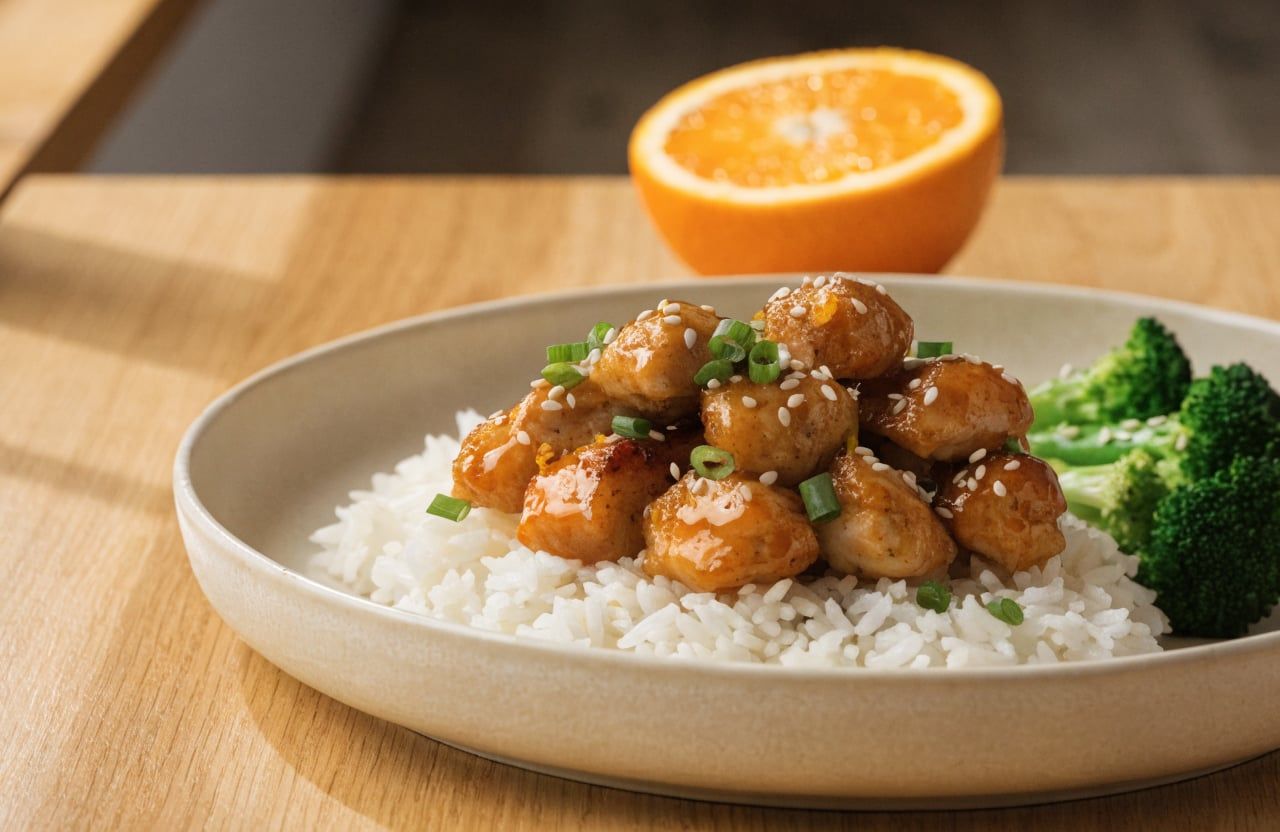
This version keeps the part you want. Chicken breast gets a thin cornstarch crust and sears in a skillet until golden, then goes into a glaze made with fresh orange juice and zest, ginger, garlic and a little honey. With rice and broccoli, each plate has 46 grams of protein and about 525 calories.
It's on the table in 40 minutes, less than some delivery waits. The trick is the order: crust first, sauce last.
Why it works
The chicken is most of the plate
Each plate gets 6 ounces of raw chicken breast, about 38 grams of protein by itself. The egg white in the coating, the soy sauce, rice and broccoli add the rest. Takeout versions wrap smaller pieces of chicken in thick batter, so a bigger share of every bite is fried flour.
A crust without a fryer
Egg white and a spoonful of soy sauce make the chicken tacky, so a light dusting of cornstarch sticks in a thin, even layer. In a hot skillet that layer turns golden and crisp with just 4 teaspoons of oil. You get the crunch of a fried coating without a pot of oil to heat and discard.
Real orange, not orange candy
Most of the orange flavor lives in the peel, not the juice. A full tablespoon of zest gives the sauce its bright, slightly bitter orange smell, fresh juice brings the tang, and just 2 tablespoons of honey round it off. Cornstarch turns it glossy in about a minute.
Nutrition per serving
- Calories
- 525 kcal
- Protein
- 46 g
- Carbs
- 59 g
- Fat
- 11 g
- Fiber
- 3.5 g
Nutrition calculated from USDA FoodData Central
Recipe
Healthy Orange Chicken (Better Than Takeout, 46g Protein)
Protein in this batch: 184 g
Equipment
- 12-inch nonstick skillet with lid
- Medium saucepan with lid
- Instant-read thermometer
- Microplane or fine grater
- Large mixing bowl
- Wire rack or plate
Ingredients
Cut the pieces as evenly as you can so they finish together, and pat them dry with paper towels before coating. Wet chicken makes a gummy crust.
Potato starch works the same way and gives a slightly crunchier crust. Don't swap in flour: it absorbs the sauce and turns pasty.
About 2 to 3 navel oranges. Zest them before you juice them. Bottled not-from-concentrate juice works in a pinch, but it tastes sweeter, so cut the honey by a teaspoon.
Instructions
Start the rice
Rinse the rice until the water runs nearly clear, then add it to the saucepan with the water and 1/4 teaspoon of salt. Bring it to a boil, cover, and cook on the lowest heat for 15 minutes. Take it off the heat and leave the lid on for 10 minutes. Everything else happens during that time.
Coat the chicken
In a large bowl, toss the dry chicken pieces with the egg white and 1 tablespoon of the soy sauce until every piece looks wet. Sprinkle 1/4 cup of the cornstarch over the top and toss again until no dry powder remains. Each piece should have a thin, tacky, matte coating, not a thick paste.
Whisk the orange sauce
In a measuring cup, whisk the orange juice, orange zest, the remaining 3 tablespoons of soy sauce, the honey, rice vinegar, red pepper flakes and the remaining 1 tablespoon of cornstarch until smooth. It will look cloudy and pale orange. Leave the whisk in it: the cornstarch settles to the bottom within a minute or two.
Steam the broccoli
Put the broccoli in the skillet with 1/4 cup of water and a pinch of salt, cover and cook over medium-high heat for 3 minutes, until it turns bright green and a knife slides in with a little resistance. Transfer it to a plate, pour out any water and dry the skillet completely with a towel.
Sear the chicken in two batches
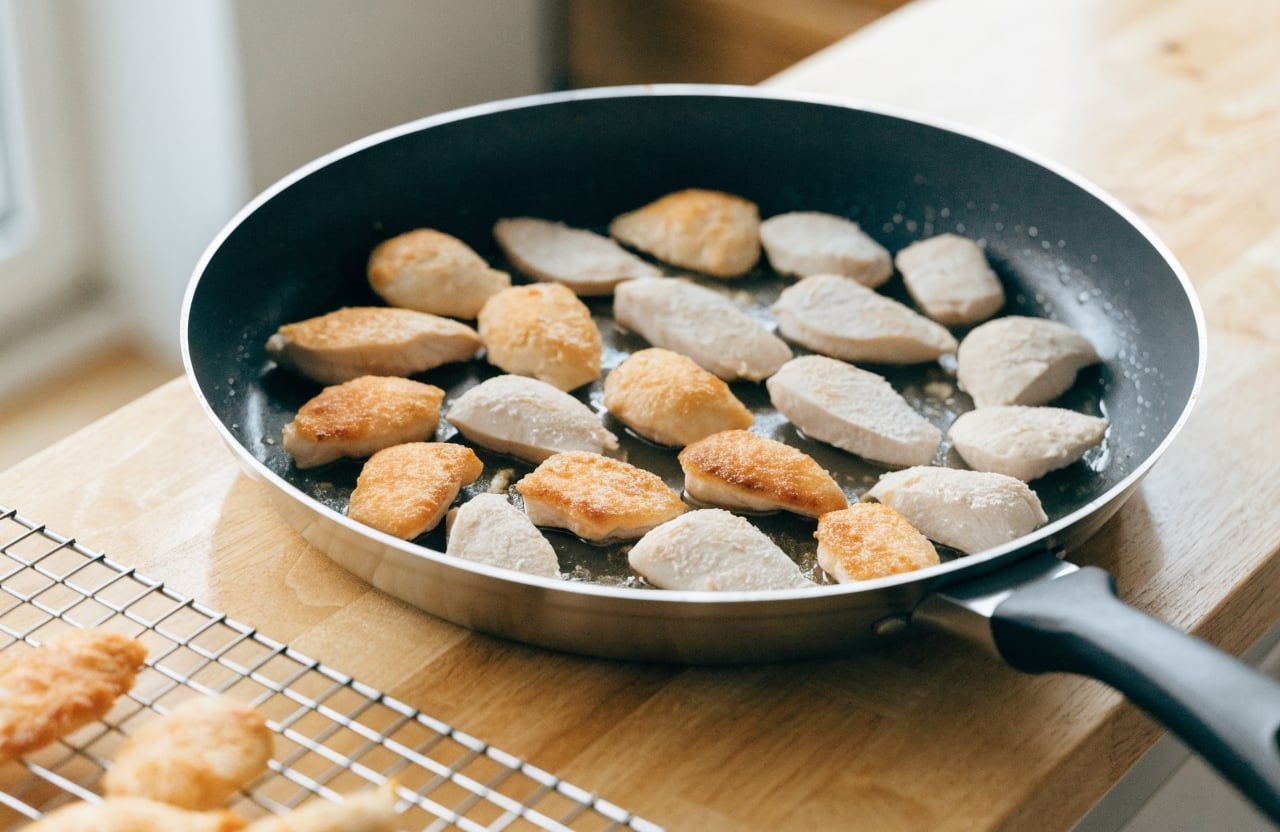
Heat 2 teaspoons of oil in the skillet over medium-high until it shimmers. Add half the chicken in a single layer, pieces not touching, and leave it for 2 to 3 minutes, until the undersides are golden and release easily. Turn and cook 3 to 4 minutes more, until golden on all sides and 165°F (74°C) inside. Move to a rack and repeat.
Thicken the sauce
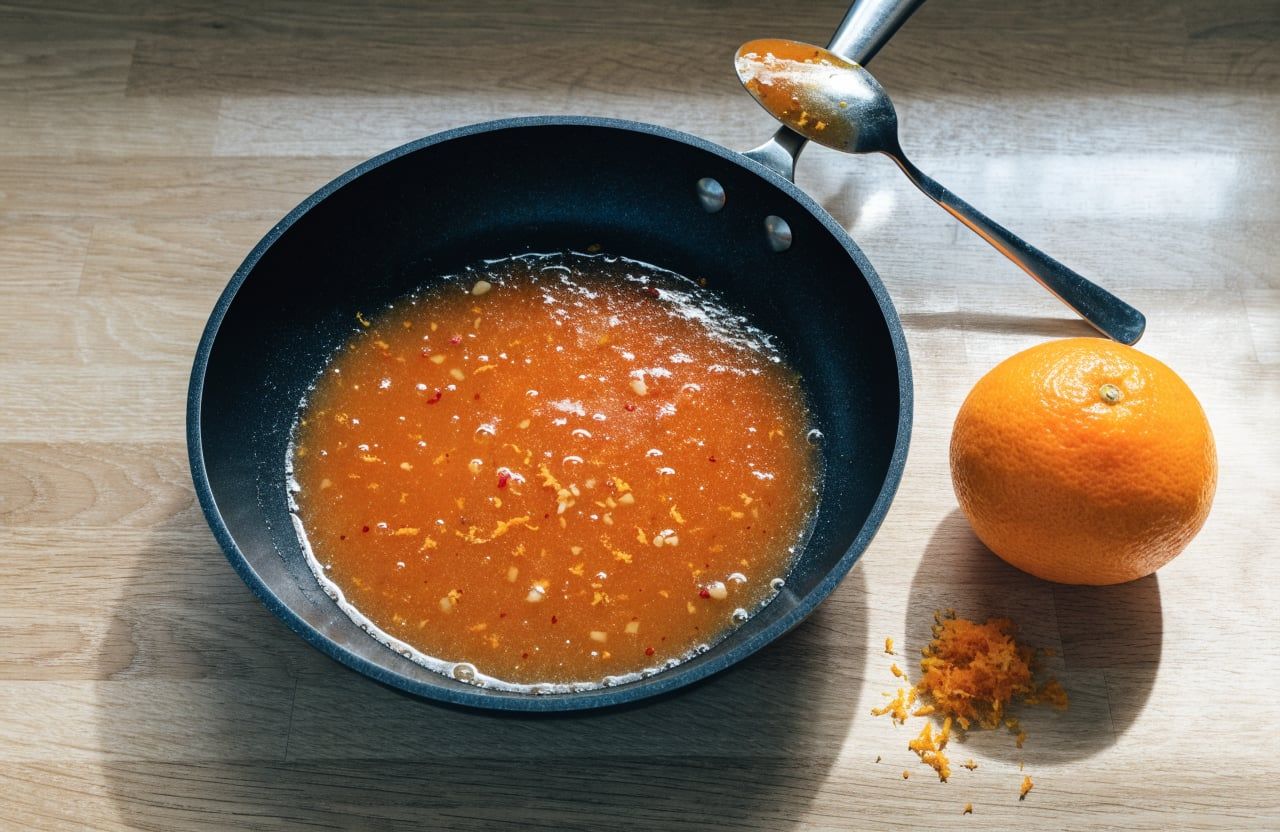
Lower the heat to medium and add the last 1/2 teaspoon of oil, the garlic and the ginger. Stir for 30 seconds, until fragrant. Whisk the sauce again and pour it in. It bubbles, then turns from cloudy to glossy and translucent orange in 1 to 2 minutes. It's ready when it coats the back of a spoon.
Toss and serve right away
Turn off the heat, add the chicken back to the skillet and toss for 15 to 20 seconds, just until every piece is lacquered with sauce. Spoon it over the rice with the broccoli on the side, and finish with the green onions and sesame seeds. Serve it immediately, while the crust still has some crunch under the glaze.
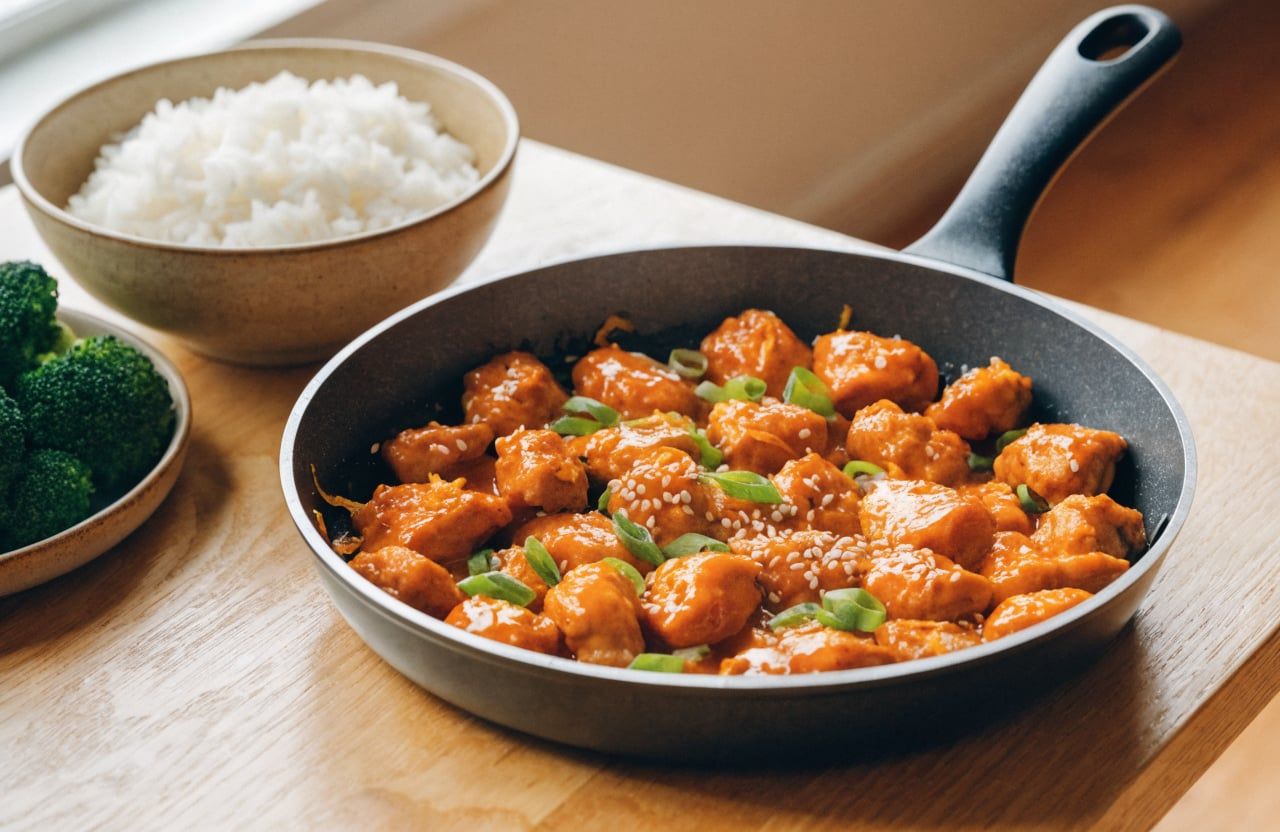
Per serving: 525 kcal · 46 g protein · 59 g carbs · 11 g fat · 3.5 g fiber. Nutrition calculated from USDA FoodData Central.
Mistakes to avoid
Crowding the skillet
Put all the chicken in at once and the pan temperature drops, the pieces release water and the cornstarch steams into a pale, gummy skin. Two batches with space between the pieces take four extra minutes and are the difference between a crust and a coating that slides off.
Pouring in settled sauce
Cornstarch sinks to the bottom of the cup fast. Pour without re-whisking and the first half of the sauce stays thin while the last spoonful drops in as a clump, so you get a runny sauce with lumps. Whisk right before it hits the pan, and keep stirring as it thickens.
Saucing the chicken too early
The crust is thin, and it softens the longer it sits in sauce. If the chicken simmers in the glaze or waits in it while the rice finishes, it goes from crisp to soft. Make the sauce last, toss the chicken off the heat and get it on plates within a few minutes.
Skipping the zest
Orange juice alone reduces into something that tastes sweet but only vaguely of orange. The aromatic oils that make orange chicken smell like orange are in the peel. Zest before you juice, grate only the bright orange layer and stop at the white pith, which is bitter.
Variations
Air fryer orange chicken
Coat the chicken the same way, spread it in a single layer in the basket, mist it with cooking spray and air fry at 400°F (200°C) for 10 to 12 minutes, shaking halfway, until golden and 165°F (74°C) inside. Use 1 teaspoon of oil only for the garlic and ginger (about 46 g protein, 490 kcal).
Chicken thigh version
Use 1 1/2 lb (680 g) of boneless, skinless chicken thighs, trimmed of visible fat and cut into 1-inch pieces. They're juicier and harder to overcook. Cook them to at least 165°F (74°C); thighs turn more tender around 175°F (79°C). Sear them 1 to 2 minutes longer per batch (about 42 g protein, 527 kcal).
With cauliflower rice
Replace the rice with 5 cups (600 g) of riced cauliflower, cooked in the dry skillet for 5 to 6 minutes before the broccoli, until it steams off its moisture and browns lightly in spots. It soaks up the orange sauce the same way and drops about 90 calories per plate (about 47 g protein, 435 kcal).
Storage
- Fridge
- This is best eaten right away. Leftovers keep in an airtight container for up to 4 days, but the crust softens and the chicken takes on a glazed, tender texture, closer to a stir-fry.
- Freezer
- Freeze the sauced chicken for up to 2 months. The coating won't crisp again after thawing, but the flavor holds. Freeze rice separately and thaw both overnight in the fridge.
- Reheat
- Reheat the chicken in a skillet over medium heat for 3 to 4 minutes, stirring, or in the air fryer at 375°F (190°C) for 4 to 5 minutes, until it reaches 165°F (74°C). The air fryer brings back some of the crunch.
FAQ
Is orange chicken healthy?
Takeout orange chicken is battered, deep-fried and tossed in a sauce heavy on sugar, so much of each portion is oil and sugar rather than chicken. This version uses lean chicken breast with a thin cornstarch crust, a skillet sear with 4 teaspoons of oil, and a sauce sweetened mostly by orange juice. A full plate with rice and broccoli is about 525 calories with 46 grams of protein.
How do you make orange chicken crispy without deep-frying?
Use a thin cornstarch coating held on with egg white, a hot skillet with a little oil, and space between the pieces so they sear instead of steam. Leave them alone until the crust releases on its own. Add the sauce at the very end, off the heat. An air fryer at 400°F (200°C) also works.
Can I use store-bought orange juice for orange chicken?
Yes. Not-from-concentrate orange juice works, but it tastes sweeter and flatter than fresh, so reduce the honey by a teaspoon and don't skip the zest from one orange, which carries most of the orange flavor. Avoid orange juice cocktail or drinks with added sugar, which make the sauce cloying and push the calories up.
Can you meal prep healthy orange chicken?
Yes, with one trade-off: the crust softens in the fridge. It still tastes good, with a tender, glazed texture. Pack the chicken, rice and broccoli in containers for up to 4 days and reheat the chicken in a skillet or air fryer instead of the microwave to bring back some texture.
Is this orange chicken gluten-free?
It can be. Cornstarch, orange juice, honey and rice vinegar are naturally gluten-free, so the only ingredient to change is the soy sauce: use tamari labeled gluten-free in the same amount. Check the label on your rice vinegar too, since some seasoned versions contain additives. The macros stay practically the same.