Protein Cheesecake Cups (No Bake, Single Serve, 35g Protein)
It's Wednesday, and you've been thinking about cheesecake since lunch. Not a yogurt cup with a graham cracker crumbled on top. Real cheesecake: the crumbly crust, the dense, tangy filling, the hint of lemon.
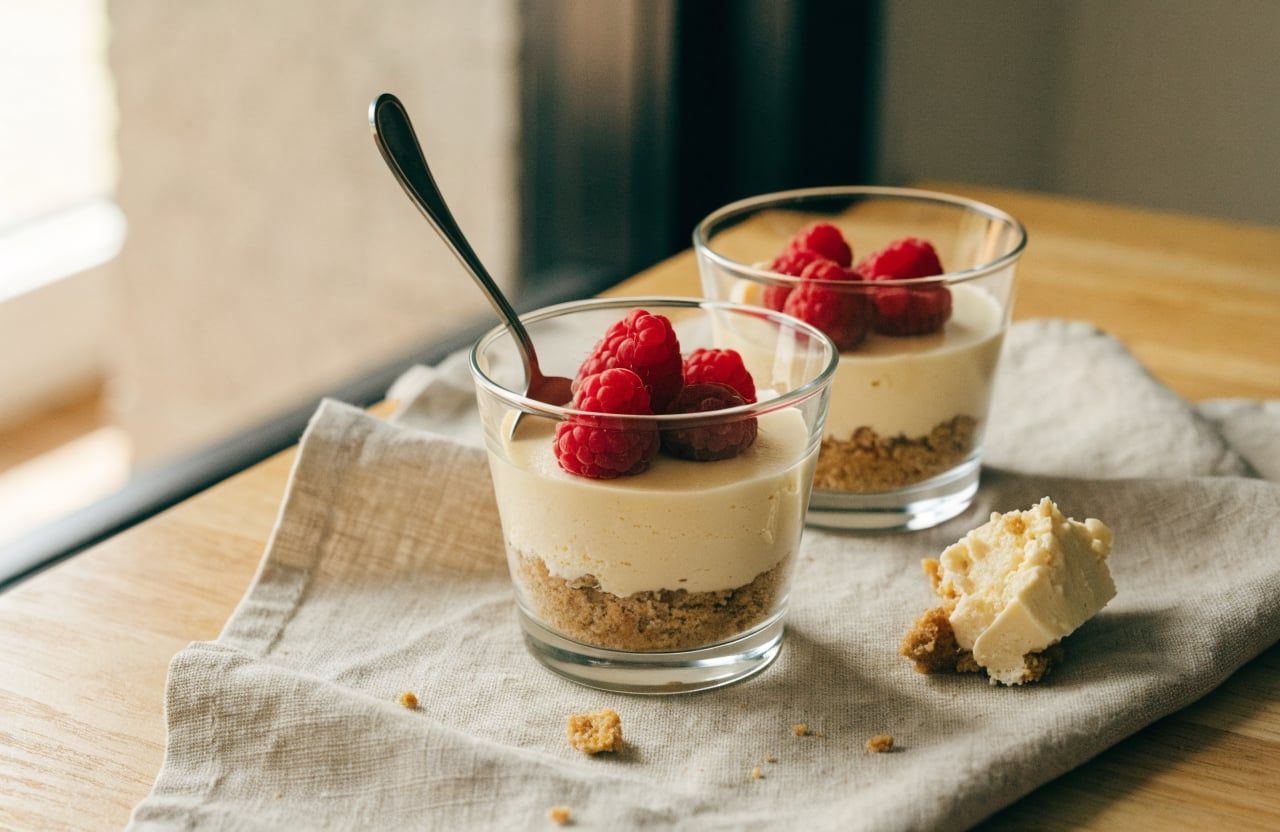
A whole one means a springform pan, a water bath, four eggs and a night in the fridge, and then eleven more slices waiting for you. These cups skip all of that. A buttery graham crust pressed into a glass, topped with a filling of blended cottage cheese, Neufchatel, Greek yogurt and vanilla whey. No oven and no eggs. Each cup has 35 grams of protein and about 370 calories.
The work takes 10 minutes. The order you blend things in decides whether it's silky or lumpy, so the method starts there.
Why it works
Three kinds of dairy plus whey
A 5-ounce slice of classic baked cheesecake has roughly 450 calories and 8 grams of protein. Here, each cup gets about 14 grams of protein from cottage cheese, 6 from Greek yogurt, 12 from half a scoop of whey and a little more from the Neufchatel, for 35 grams at about 370 calories.
No oven, no eggs, no slicing
Baked cheesecake needs eggs to set, which is why it takes a slow bake, a water bath and hours of cooling to avoid cracks. This filling sets in the fridge instead, so there's nothing to bake and no raw egg to worry about. Two single cups also mean no leftover cake tempting you all week.
Cream cheese flavor, whey for body
Blended smooth, cottage cheese brings the tang but little body. A small amount of Neufchatel adds the rich, dense cream cheese flavor people recognize as cheesecake. The whey absorbs moisture as it chills and thickens the filling, and lemon zest plus vanilla give it the classic bakery flavor.
Nutrition per serving
- Calories
- 371 kcal
- Protein
- 35 g
- Carbs
- 29 g
- Fat
- 13 g
- Fiber
- 3 g
Nutrition calculated from USDA FoodData Central
Recipe
Protein Cheesecake Cups (No Bake, Single Serve, 35g Protein)
Protein in this batch: 70 g
Equipment
- Blender or food processor
- 2 glasses or jars (10 to 12 oz each)
- Zip-top bag and rolling pin
- Small bowl
- Silicone spatula
- Spoon
Ingredients
Regular or cinnamon grahams both work. For a gluten-free cup, use gluten-free graham-style crackers and check that your protein powder is gluten-free too.
Pour off the liquid on top of the tub before measuring. Extra whey in the tub is the most common reason the filling comes out loose.
Neufchatel is the block sold as one-third less fat cream cheese. Regular cream cheese works for about 25 more calories per cup. Avoid fat-free cream cheese, which makes the filling thin and slightly rubbery.
Instructions
Press the crust into the glasses
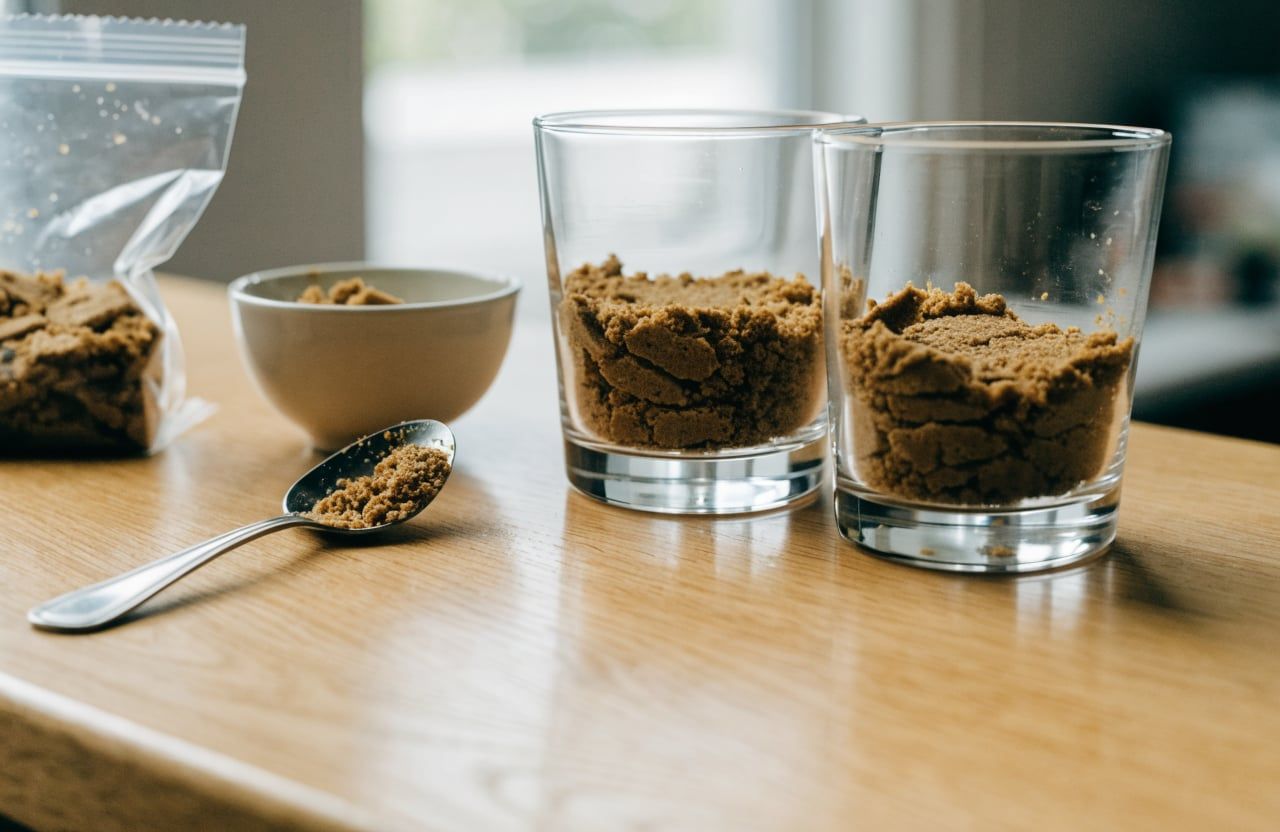
Seal the graham crackers in a zip-top bag and crush them with a rolling pin until they look like coarse sand, with no pieces larger than a lentil. Tip them into a small bowl and stir in the melted butter until the crumbs look damp and clump when pinched. Divide between the two glasses and press firmly into an even layer with the back of a spoon.
Blend the cottage cheese on its own
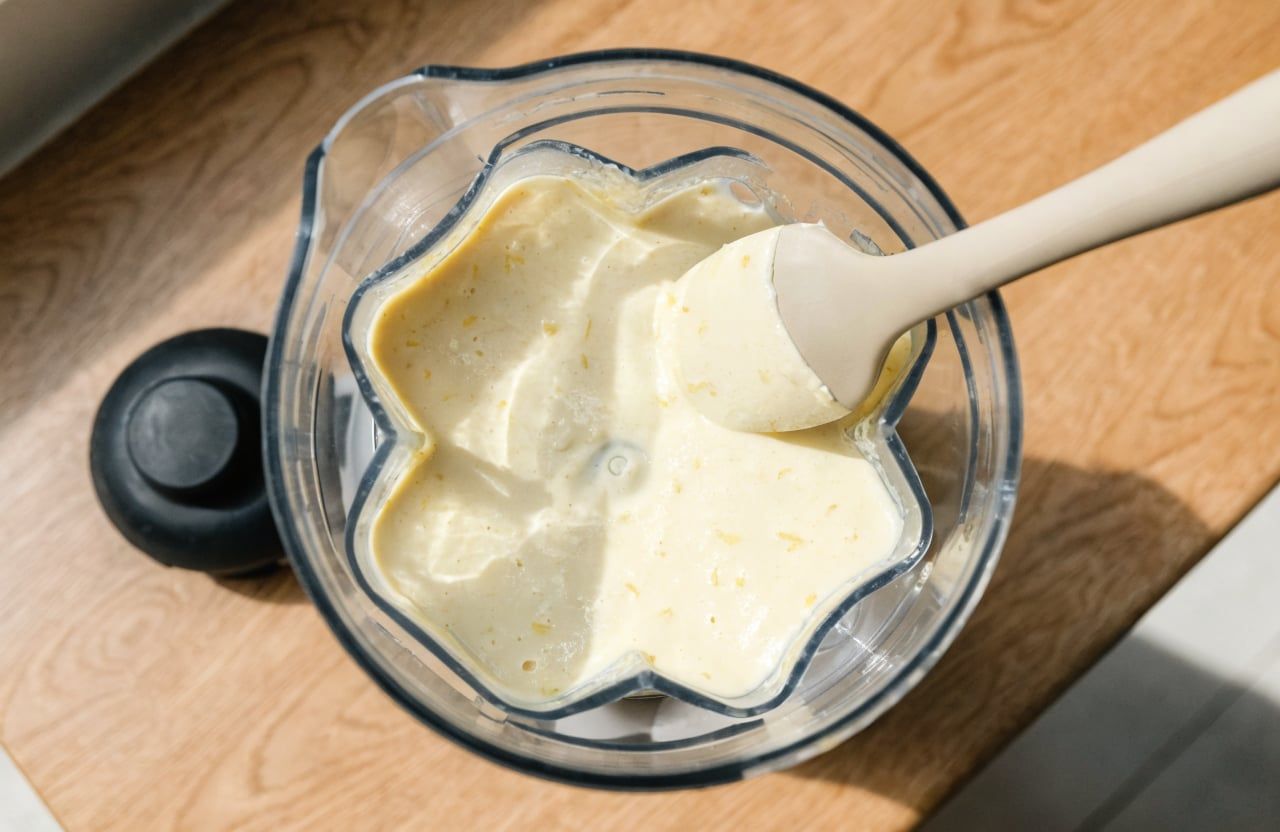
Put only the drained cottage cheese in the blender and run it on high for 45 to 60 seconds, scraping down the sides once. Stop when there isn't a single visible curd and it looks glossy and smooth, like thick sour cream. Doing this first, before anything thicker goes in, is what keeps the filling from ending up grainy.
Add the rest and blend briefly
Add the softened Neufchatel, Greek yogurt, whey, maple syrup, lemon juice, lemon zest, vanilla and salt. Blend on low for 15 to 20 seconds, scrape down the sides, then blend 10 seconds more. Stop as soon as the filling is thick, even and ivory colored, with no white flecks of cream cheese. Long blending on high whips in air and warms it.
Fill the cups
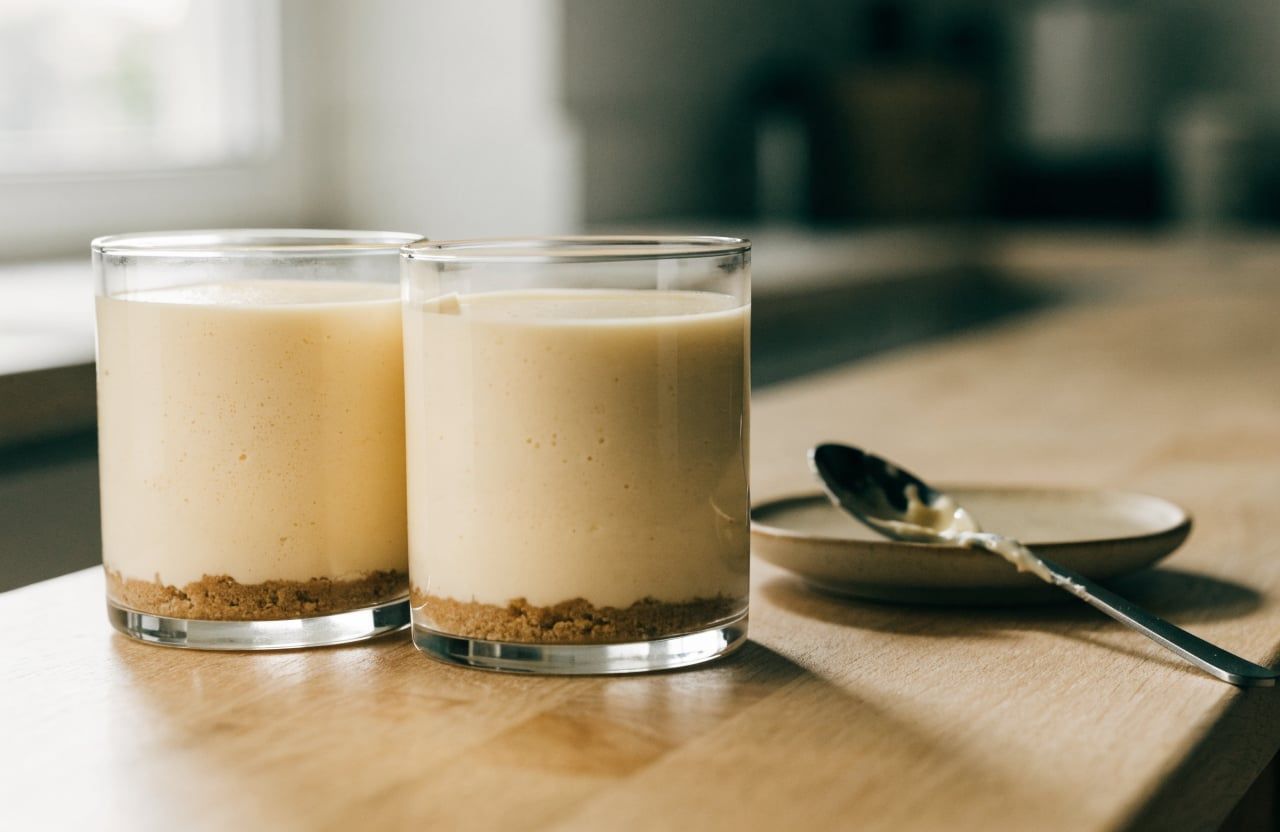
Spoon the filling over the crusts, dividing it evenly, about one cup per glass. Start in the center and push it gently toward the edges so the crust stays in place. Tap each glass firmly on the counter a few times to release air bubbles and level the top. You should see a clean line between crust and filling through the glass.
Chill until set
Cover the glasses and refrigerate for at least 2 hours, or up to overnight. As the filling chills, the cream cheese firms and the whey absorbs moisture, so it thickens noticeably. It's ready when the surface looks matte instead of shiny and a spoon leaves a clean edge that holds its shape instead of slumping back.
Top and serve cold
Right before serving, pile the raspberries on top of each cup. Berries added earlier leak juice into the filling and turn the surface pink and wet. Eat it cold, straight from the glass, digging the spoon down to the bottom so every bite gets a little of the crunchy crust with the creamy filling.
Per serving: 371 kcal · 35 g protein · 29 g carbs · 13 g fat · 3 g fiber. Nutrition calculated from USDA FoodData Central.
Mistakes to avoid
Blending everything at once
When the cottage cheese goes in with the cream cheese, yogurt and whey, the mixture is too thick for the blades to catch every curd. You end up with tiny lumps that read as grainy in a cheesecake. Blend the cottage cheese alone until glossy first, then add the rest.
Using cold cream cheese
Straight from the fridge, Neufchatel breaks into small cold pieces that the blender smears around instead of mixing in, leaving white flecks in the finished cup. Let it sit on the counter for 20 minutes, or microwave the unwrapped block for 10 seconds, until a spoon presses into it easily.
Eating it before it sets
Right out of the blender, the filling is closer to a thick dip than a cheesecake. The texture comes from the chill: the cream cheese firms up and the whey keeps absorbing liquid for the first couple of hours. Give it the full 2 hours and it spoons like a no-bake cheesecake.
Leaving the crust loose
Crumbs that are just poured into the glass float up into the filling and turn soggy. Pressing them firmly with the back of a spoon makes a compact layer that stays crisp for the first day. If the crumbs won't clump when pinched, add a few more drops of melted butter.
Variations
Chocolate cheesecake cups
Use chocolate whey instead of vanilla, skip the lemon zest and add 1 tablespoon of unsweetened cocoa powder to the blender with the rest of the filling. It comes out darker and closer to a chocolate cheesecake than a mousse, and the raspberries on top work even better against the cocoa (about 36 g protein, 375 kcal).
Pumpkin spice cheesecake cups
Add 1/2 cup of canned pumpkin puree, not pie filling, and 1 teaspoon of pumpkin pie spice to the blender, and skip the raspberries. The filling turns soft orange, tastes like pumpkin pie with a cheesecake tang, and needs slightly bigger glasses (about 36 g protein, 375 kcal).
Crustless cheesecake cups
Skip the graham crackers and butter and spoon the filling straight into the glasses, then top with the raspberries. You lose the crunch, but it's the lightest version and it takes 5 minutes. Protein barely changes and calories drop by almost a quarter (about 34 g protein, 285 kcal).
Storage
- Fridge
- Keep the covered cups in the fridge for up to 3 days. The filling holds well, but the crust softens after the first day. For meal prep, keep the crust crumbs in a separate container and add them right before eating.
- Freezer
- You can freeze the covered cups for up to 1 month. Thaw them in the fridge for 3 to 4 hours; the filling comes back a little softer. Eaten half-frozen, they taste like cheesecake ice cream.
- Reheat
- Don't heat them. This is a cold, no-bake dessert, and warmth loosens the filling back to a dip.
FAQ
Can you make protein cheesecake without cream cheese?
Yes. Replace the Neufchatel with another 1/4 cup of Greek yogurt and keep everything else the same. The filling comes out lighter and tangier, more like a cheesecake-flavored yogurt than a dense cheesecake, and it sets a little softer, so chill it the full 2 hours. Each cup has about 36 grams of protein and 315 calories.
Why is my protein cheesecake runny?
It usually hasn't chilled long enough, or extra liquid got into it. Pour off the whey on top of the cottage cheese tub, use thick strained Greek yogurt rather than regular yogurt, and blend briefly once the whey is in, since long blending warms and thins the filling. Then give it at least 2 hours in the fridge before judging the texture.
What protein powder is best for protein cheesecake?
A vanilla whey or whey and casein blend you already like the taste of, since it's the main sweetener. Casein and blends thicken more as they sit, which gives a firmer cheesecake. Pure whey isolate sets softer. Plant proteins work but tend to taste earthy and feel slightly gritty, so start with half a scoop and taste.
Is no-bake cheesecake safe to eat without baking?
Yes, this one is. It has no eggs, and every other ingredient, the cottage cheese, Neufchatel, Greek yogurt and whey, is pasteurized and ready to eat straight from the package. Treat it like any dairy dessert: keep it refrigerated, don't leave it out for more than 2 hours, and eat it within 3 days.
Does protein cheesecake taste like real cheesecake?
It tastes like a good no-bake cheesecake: creamy, tangy and vanilla-lemon, with a buttery crumb at the bottom. It's softer and lighter than a dense baked New York slice, because there are no eggs setting it in the oven. The small amount of Neufchatel is what makes it taste like cheesecake rather than sweetened yogurt, so don't skip it.