High-Protein Mac and Cheese (Cottage Cheese Sauce, 37g Protein)
It's 6 p.m., the pot of water is already on, and the table has voted: mac and cheese. The blue box is fast, but a cup of it gives you around 10 grams of protein and a sauce made from powder.
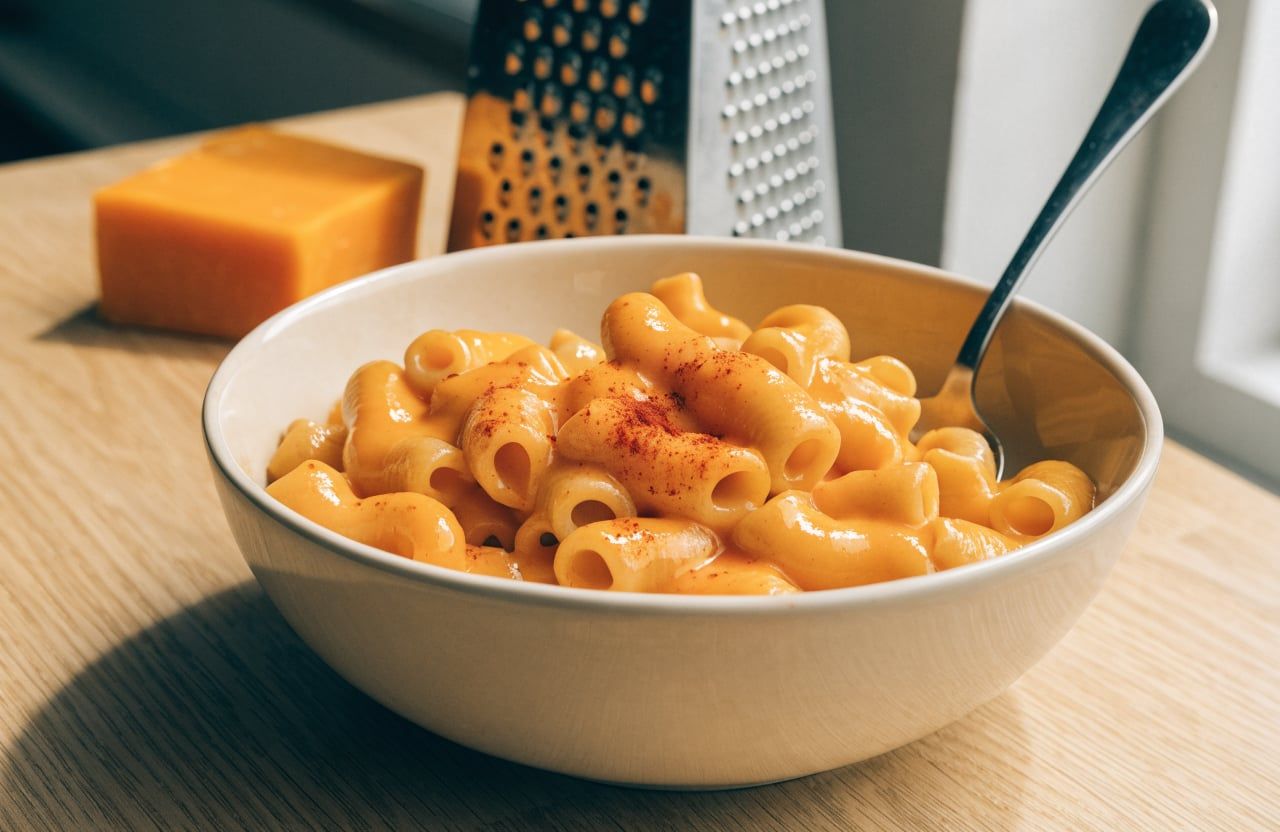
This one is still bright orange, still creamy, still made in one pot on the stove. The difference is the sauce: sharp cheddar melted into blended cottage cheese and a splash of evaporated milk. Each bowl has 37 grams of protein and about 520 calories, and nobody at the table sees a single curd.
It takes 25 minutes, most of it waiting for the water to boil. The part that keeps the cheddar smooth instead of oily is in step five.
Why it works
The sauce does the heavy lifting
Two and a half cups of 1% cottage cheese bring 70 grams of protein to the pot, more than the cheddar and pasta combined. Six ounces of sharp cheddar add 39, the pasta 30 and the evaporated milk 10. Split four ways, that's 37 grams in every bowl.
One pot, no roux
A classic cheese sauce starts with butter and flour cooked into a roux, then milk whisked in until it thickens. Here the blender does that job in one minute. The blended sauce warms in the same pot you drained the pasta from, the cheddar melts in off the heat, and the pasta goes right back in.
Built to stay smooth
Cheddar breaks when its fat escapes the protein around it. Three things stop that here: cornstarch tossed with the shreds coats them and thickens the sauce, the milk proteins in evaporated milk hold the fat in suspension, and the cheese melts off the heat, below the temperature where it turns greasy and grainy.
Nutrition per serving
- Calories
- 517 kcal
- Protein
- 37 g
- Carbs
- 53 g
- Fat
- 17 g
- Fiber
- 2.1 g
Nutrition calculated from USDA FoodData Central
Recipe
High-Protein Mac and Cheese (Cottage Cheese Sauce, 37g Protein)
Protein in this batch: 148 g
Equipment
- Large pot
- Blender
- Box grater
- Colander
- Silicone spatula or wooden spoon
- Liquid measuring cup
Ingredients
Any short pasta with ridges or hollows works: shells, cavatappi or rotini. The sauce collects inside them.
Canned evaporated milk, not sweetened condensed milk. Regular 2% milk works in a pinch, but the sauce is a little less stable.
Buy orange sharp cheddar for the classic color. Avoid pre-shredded bags and cheddar aged more than a year: both melt grainy or oily.
Instructions
Shred and coat the cheddar
While the water heats, shred the cheddar on the large holes of a box grater. Put the shreds in a bowl, sprinkle the cornstarch over them and toss with your fingers until every strand looks lightly dusted and no white powder is sitting at the bottom. Set it aside.
Boil the macaroni
Bring a large pot of water to a boil and add 1 tablespoon of salt. Cook the elbows 1 minute less than the package says, usually 6 to 7 minutes, stirring once or twice. They should be tender with a slight bite. Scoop out 1 cup of pasta water, then drain. Don't rinse.
Blend the sauce
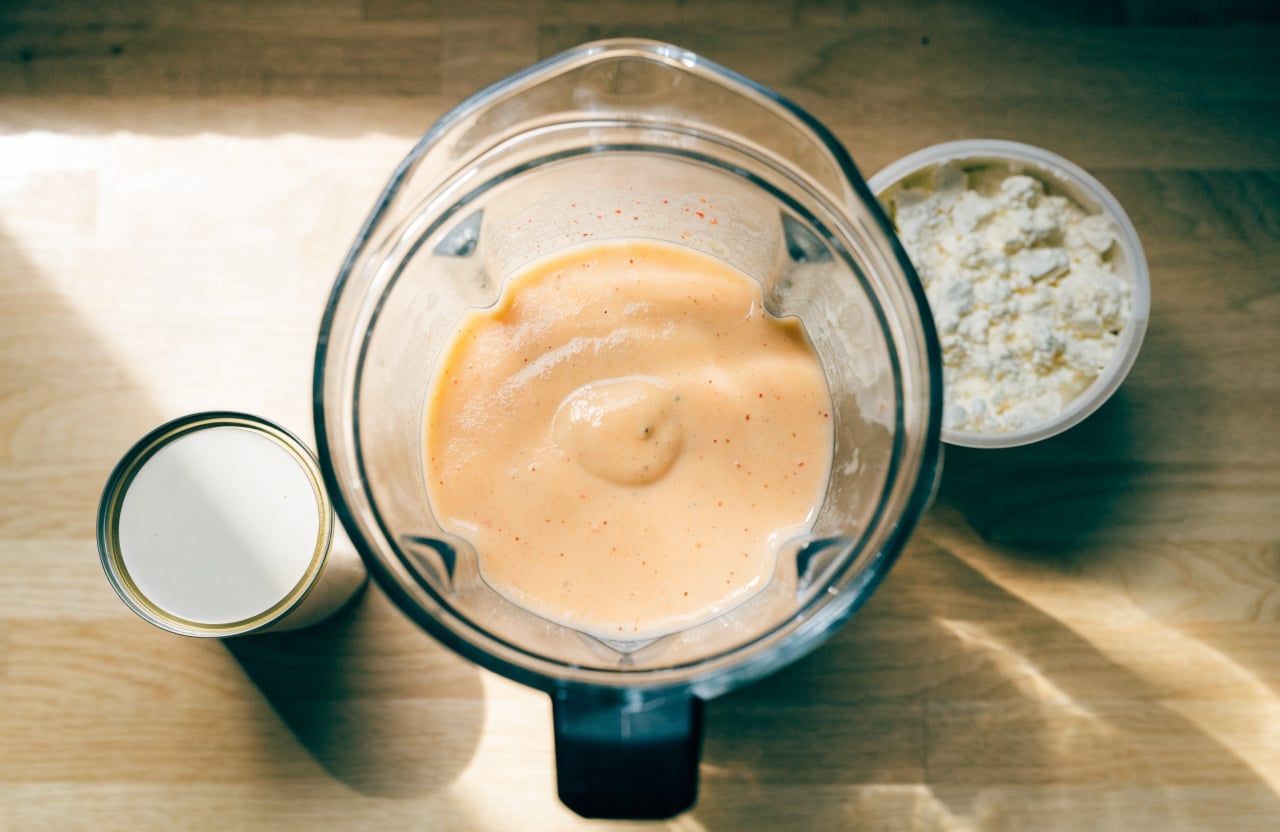
Add the cottage cheese, evaporated milk, mustard, paprika and garlic powder to a blender. Blend on high for 45 to 60 seconds, scrape down the sides, and blend 10 seconds more. It's ready when it's completely smooth, pale peach in color and pours like thick yogurt, with no curds left.
Warm the sauce in the empty pot
Pour the blended sauce into the pot you cooked the pasta in and set it over medium-low heat. Stir constantly with a spatula for 2 to 3 minutes, scraping the bottom, until it's hot and steaming with no bubbles. If it starts to bubble at the edges, pull the pot off the heat right away.
Melt the cheddar off the heat
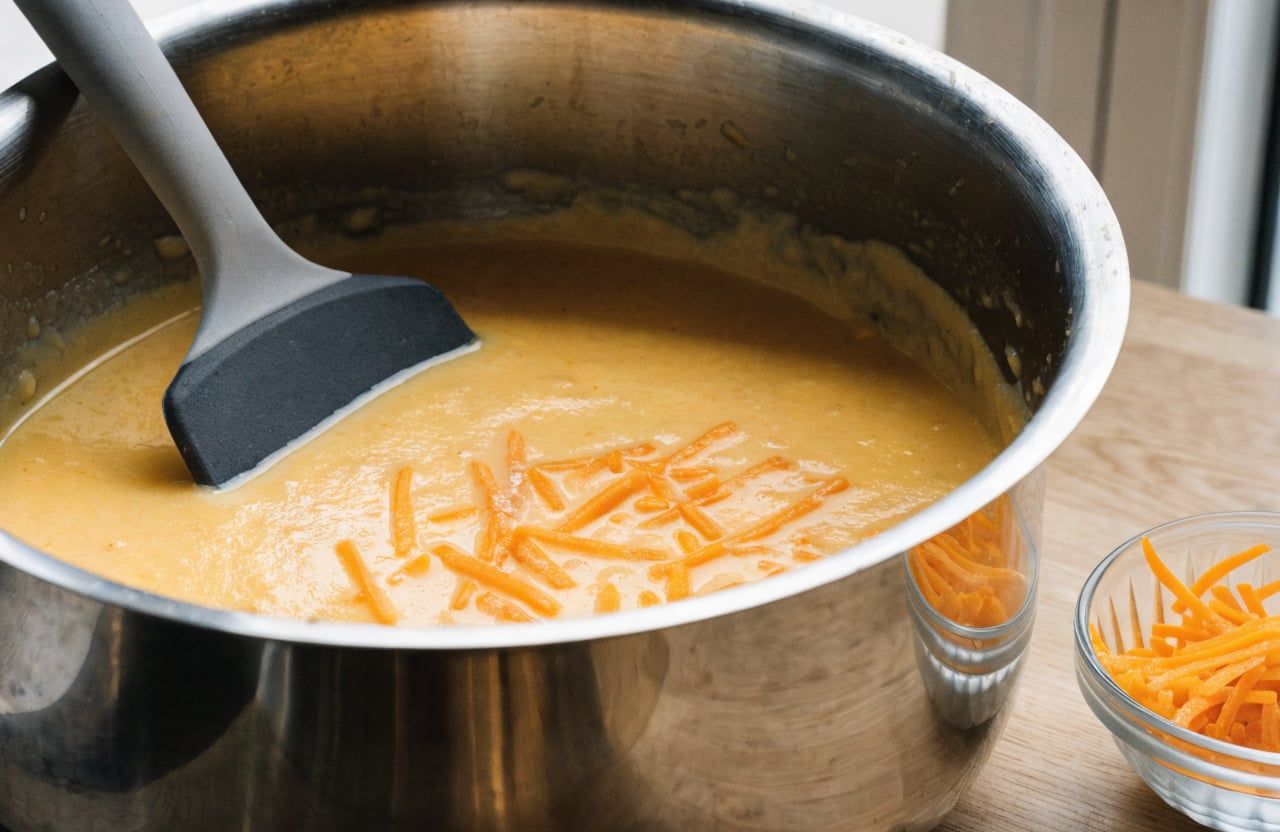
Take the pot off the burner. Add the cheddar in three handfuls, stirring after each until it disappears before adding the next. In about 2 minutes you'll have a smooth, glossy orange sauce. If the last handful won't melt, set the pot back over low heat for 20 to 30 seconds, stirring, then remove it again.
Fold in the macaroni and serve
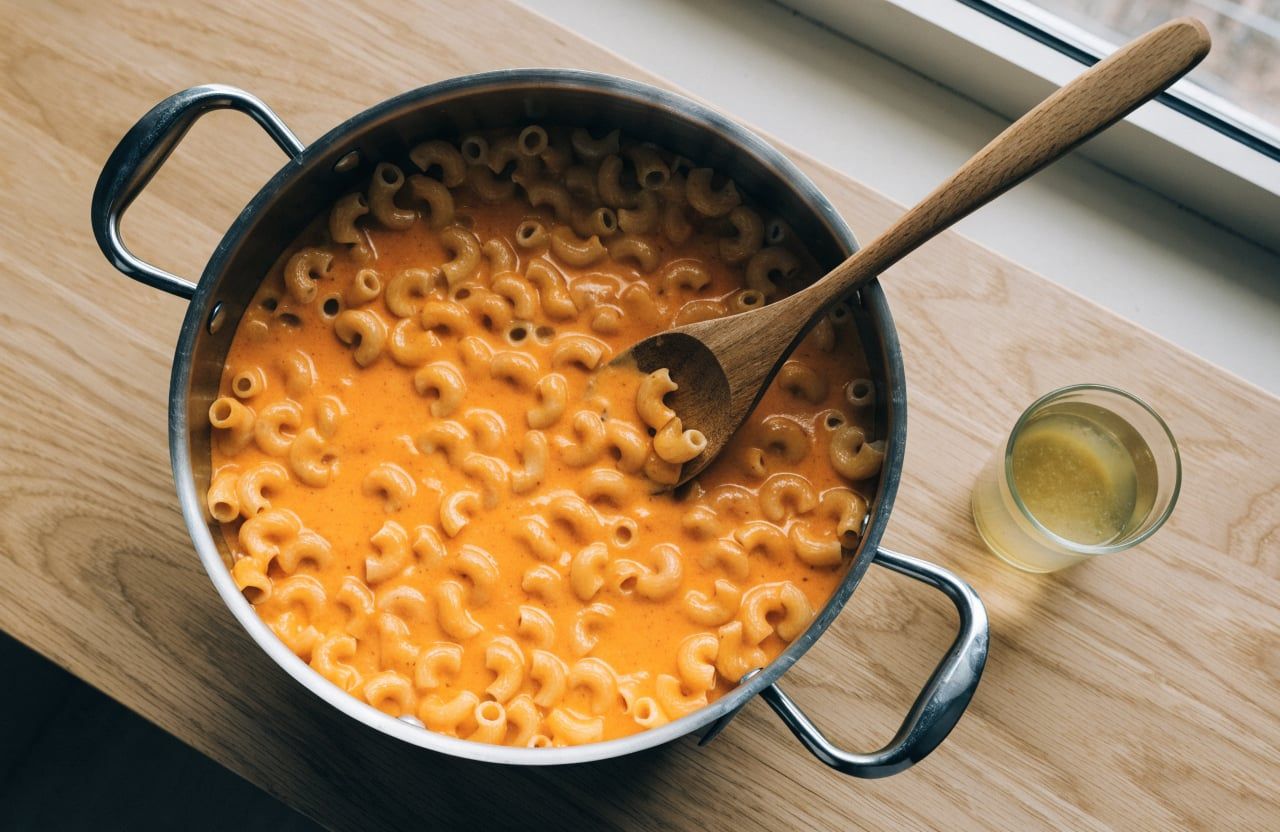
Add the drained elbows and 1/4 cup of the pasta water and fold until every piece is coated and the sauce clings instead of pooling. It thickens as it sits, so leave it a little loose and add more pasta water a tablespoon at a time if needed. Taste for salt and serve right away.
Per serving: 517 kcal · 37 g protein · 53 g carbs · 17 g fat · 2.1 g fiber. Nutrition calculated from USDA FoodData Central.
Mistakes to avoid
Using pre-shredded cheddar
Bagged shreds are coated with potato starch or cellulose so they don't clump in the package. That same coating keeps them from melting into one smooth sauce, and the result is gritty. Shredding a block takes two minutes and is the biggest single difference between a silky sauce and a sandy one.
Melting the cheese over the flame
Cheddar stirred into a bubbling sauce tightens up, squeezes out its fat and leaves orange oil floating on top with rubbery strings underneath. Always take the pot off the burner first. The blended sauce is already hot enough to melt six ounces of cheese; it just needs stirring and a couple of minutes.
Reaching for extra-sharp aged cheddar
The longer cheddar ages, the more its proteins break down and the less willing it is to melt smoothly. Two-year cheddar is wonderful on a cracker and tends to go oily in a sauce. Stick with regular sharp cheddar. For more bite, add another teaspoon of mustard instead.
Cooking the pasta all the way
Elbows keep absorbing liquid after they meet the sauce. Fully cooked pasta turns soft and swollen in a few minutes and drinks the sauce until the pot looks dry. Pull it a minute early and let it finish in the sauce, and keep that reserved pasta water within reach.
Variations
Broccoli mac and cheese
Add 2 cups (180 g) of small broccoli florets to the pasta pot for the last 3 minutes of cooking and drain them with the elbows. They come out bright green and tender, and the cheese sauce catches in every floret. An easy way to get a vegetable onto the plate (about 39 g protein, 530 kcal).
Butternut squash mac
Blend 1 cup (240 g) of thawed frozen butternut squash puree into the sauce along with the cottage cheese. It deepens the orange color, adds a mild sweetness and makes the sauce a little thicker, so you may need an extra splash of pasta water at the end (about 38 g protein, 540 kcal).
Chicken mac and cheese
Fold 1 cup (140 g) of shredded cooked chicken breast into the pot with the macaroni and let it warm through for a minute over low heat. Leftover roasted or air fryer chicken works. It turns a side dish into a full dinner (about 48 g protein, 575 kcal).
Storage
- Fridge
- Keep leftovers in an airtight container for up to 4 days. The pasta absorbs sauce overnight, so it looks drier and firmer when cold. That's normal.
- Freezer
- Not recommended. The cottage cheese sauce separates and turns grainy after thawing, and the elbows go soft. Cook a fresh batch instead; it only takes 25 minutes.
- Reheat
- Warm it in a saucepan over low heat with 2 to 3 tablespoons of milk per serving, stirring until creamy. In the microwave, add the same splash of milk, cover, and heat at 50% power in 1-minute bursts, stirring between each.
FAQ
Can kids tell there's cottage cheese in this mac and cheese?
Not when it's blended properly. After 45 to 60 seconds in the blender there are no curds left, and once sharp cheddar, mustard and paprika go in, the sauce tastes like classic cheddar mac with a slightly lighter, tangier finish. The color is the familiar bright orange. The only giveaway is visible curds, so blend until the sauce is completely smooth.
Why did my cheese sauce turn oily or grainy?
It got too hot, or the cheese was the wrong kind. Heat past a simmer makes cheddar's proteins tighten and push out fat, which shows up as oil on top and a grainy texture. Pre-shredded cheese and very aged cheddar make it worse. Melt block-shredded sharp cheddar off the heat, and if the sauce starts to break, stir in a tablespoon of warm pasta water.
Can I use protein pasta for even more protein?
Yes. Chickpea, lentil or wheat-based high-protein pastas all work with this sauce. Most have roughly 11 to 14 grams of protein per 2-ounce serving instead of about 7, which pushes each bowl past 40 grams. Legume pastas cook faster and turn mushy if overcooked, so start checking 2 minutes before the package time.
Can I bake this mac and cheese?
You can, but it's built as a stovetop recipe. To bake it, undercook the pasta by 2 minutes, stir in an extra 1/4 cup of pasta water so it doesn't dry out, spread it in a baking dish and top it with a few tablespoons of breadcrumbs. Bake at 375°F (190°C) for 15 to 20 minutes, until the edges bubble and the top browns.
How does this compare with boxed mac and cheese?
A cup of boxed mac and cheese made according to the package usually lands around 9 to 13 grams of protein. A 1 1/2-cup bowl of this recipe has 37 grams and about 520 calories, and the sauce is made from real cheddar and cottage cheese instead of a powder packet. It takes about 15 minutes longer.