Cottage Cheese Cookie Dough (Edible, 33g Protein)
You're making cookies, and the best part happens before the oven: the spoonful of dough off the beater. Then you remember the raw egg and the raw flour, and the spoon goes in the sink.
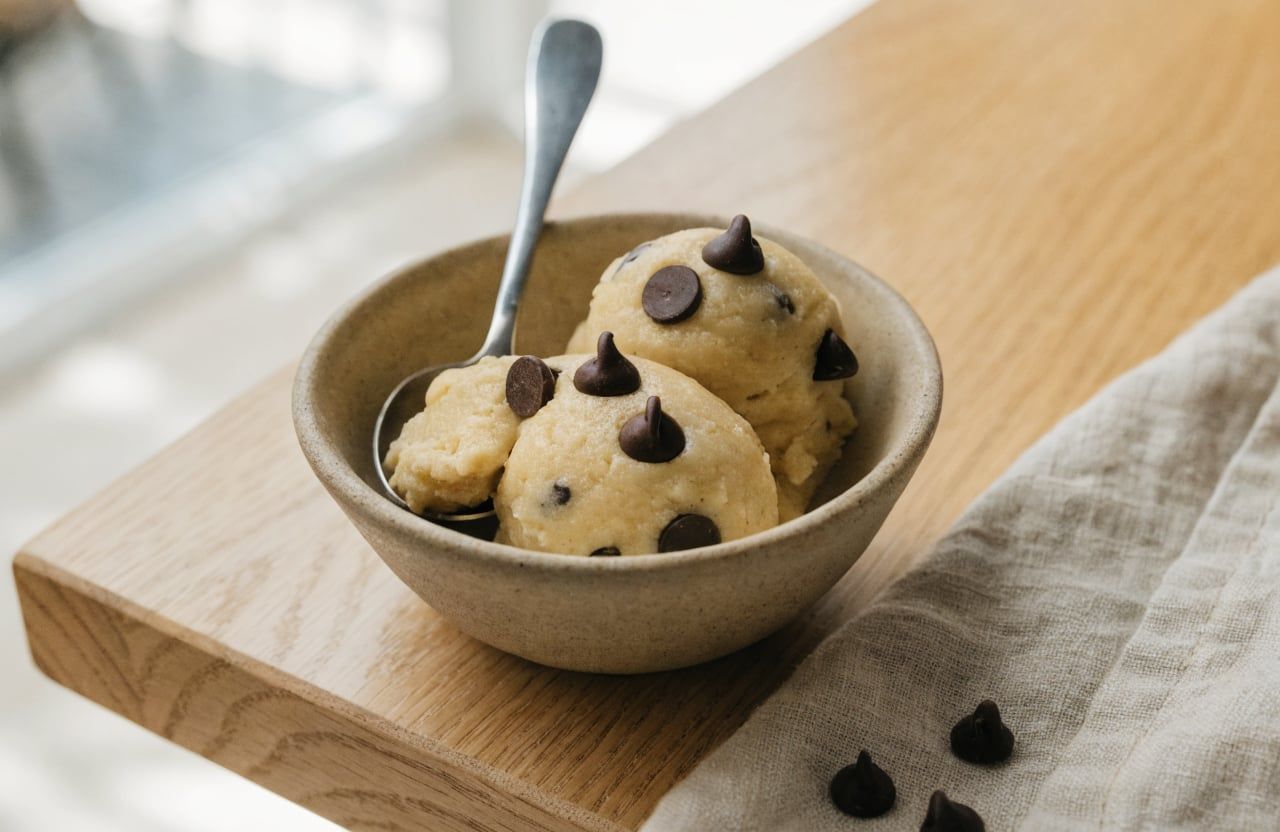
This dough skips both. Cottage cheese is blended until it's as smooth as frosting, then peanut butter, maple syrup, vanilla whey and oat flour turn it into something thick, sweet and speckled with chocolate chips. It's made to be eaten raw, straight from the bowl. Each serving has 33 grams of protein and about 440 calories.
It takes 10 minutes of work and a 30-minute chill. The draining step at the start is what makes it scoopable, so don't skip it.
Why it works
Cottage cheese carries it
A cup of 1% cottage cheese has about 28 grams of protein and very little fat, so it can replace the butter and sugar that normally make up most of a dough. One scoop of whey adds 23 more, and peanut butter and oat flour bring the batch to 66 grams, 33 per bowl.
No oven, one bowl
The blender does the only hard part, turning curds into a smooth base in under a minute. Everything else is stirred by hand in one bowl. There's nothing to bake and nothing to cool, just a half hour in the fridge while the dry ingredients soak up moisture.
Safe raw by design
Regular dough is risky raw because of two ingredients. There are no eggs here, and the flour is oat flour, milled from oats that are steamed or kiln-toasted during processing. The body comes from whey and oat flour absorbing the cheese's moisture, which firms it into a soft, scoopable dough.
Nutrition per serving
- Calories
- 440 kcal
- Protein
- 33 g
- Carbs
- 43 g
- Fat
- 15 g
- Fiber
- 3.6 g
Nutrition calculated from USDA FoodData Central
Recipe
Cottage Cheese Cookie Dough (Edible, 33g Protein)
Protein in this batch: 66 g
Equipment
- Fine-mesh sieve
- Blender, food processor or immersion blender
- Medium mixing bowl
- Silicone spatula
- Cookie scoop or spoon
Ingredients
Measure it, then drain it. 2% cottage cheese makes a richer dough for about 20 more calories per bowl. Avoid fat-free: it's wetter and has a sharper tang that the peanut butter can't fully cover.
A drippy natural peanut butter blends in most easily. No-stir brands work but make a stiffer, sweeter base. Almond or cashew butter can be swapped in one for one.
Buy oat flour or grind 1/2 cup plus 1 tablespoon of rolled oats in a dry blender until powdery. Rolled oats are steamed before rolling, unlike wheat flour, which gets no heat step. Choose certified gluten-free oats if you need them.
Instructions
Drain the cottage cheese
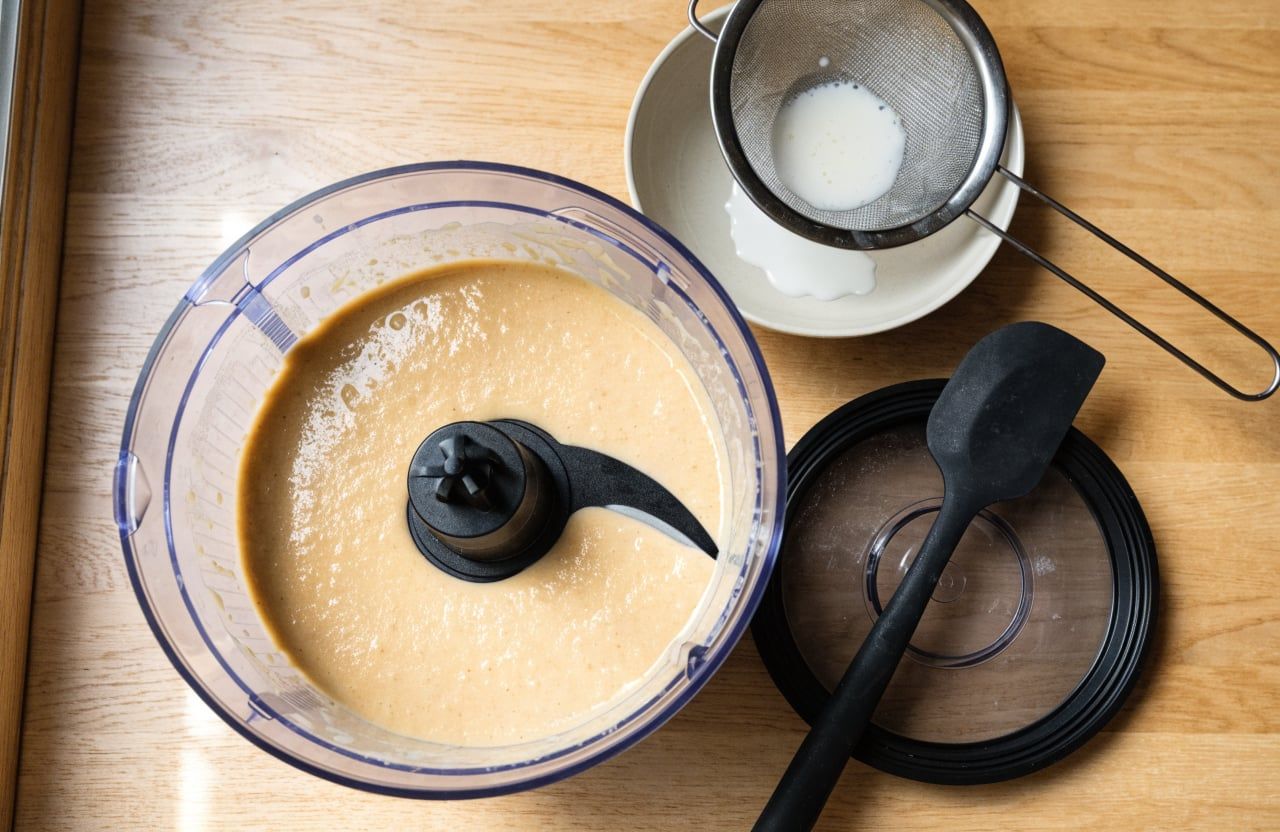
Measure the cottage cheese, then tip it into a fine-mesh sieve set over a bowl. Let it drain for 5 minutes, pressing gently with a spatula once or twice. A tablespoon or two of cloudy liquid will run out. Less water in the base means a thicker dough, and it's the one step that decides whether you get dough or pudding.
Blend the base until silky
Put the drained cottage cheese, peanut butter, maple syrup, vanilla and salt in a blender or food processor, or in a tall cup for an immersion blender. Blend for 45 to 60 seconds, scraping down once, until there isn't a single curd left and the mixture is pale tan, glossy and as smooth as frosting.
Stir in the whey and oat flour
Scrape the base into a mixing bowl. Add the whey and oat flour and fold them in with a spatula, pressing out dry pockets against the side of the bowl, until no streaks of powder remain. Do this by hand, not in the blender. At this point it will look soft and loose, like thick brownie batter.
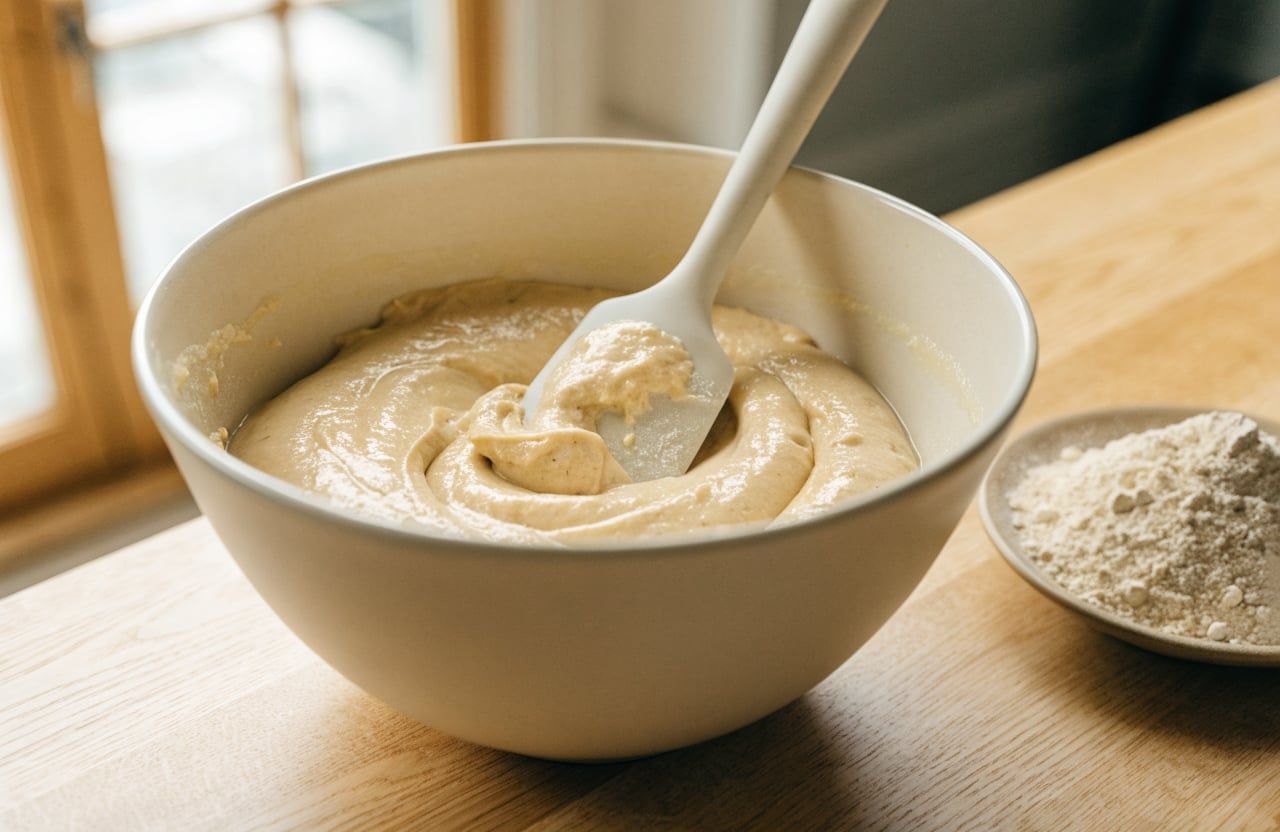
Chill for 30 minutes
Cover the bowl and refrigerate it for at least 30 minutes. The oat flour and whey keep absorbing moisture while it rests, so the dough firms up and turns from spreadable to scoopable. It's ready when a spoon dragged through it leaves a clean trench that holds its shape instead of slowly filling back in.
Fold in the chips and scoop
Fold in most of the chocolate chips, saving a few for the top. Use a cookie scoop or two spoons to portion the dough into two bowls, about 3/4 cup each, and press the remaining chips onto the rounded tops. Eat it cold, while it's firm enough to hold the scoop's shape.

Per serving: 440 kcal · 33 g protein · 43 g carbs · 15 g fat · 3.6 g fiber. Nutrition calculated from USDA FoodData Central.
Mistakes to avoid
Skipping the drain
Cottage cheese holds more liquid than it looks, and that liquid is the difference between dough and a runny dip. Five minutes in a sieve removes enough to change the texture. If your brand looks especially wet, give it ten minutes and press a little harder.
Blending the dry ingredients
Whey and oat flour turn gluey when a blender works them, and a dense mix packs under the blade where it won't move. Blend only the wet ingredients until smooth, then fold in the powders by hand. It takes less than a minute and gives a softer, more even dough.
Using raw flour from the bag
All-purpose flour isn't a ready-to-eat ingredient. The grain isn't heated before milling, so it can carry E. coli, and flour has been recalled more than once for exactly that. If you want wheat flour instead of oat flour, heat-treat it to 165°F (74°C) first, as in the variation below.
Eating it before it chills
Straight after mixing, the dough is soft and tastes mostly of sweet cheese. After 30 minutes the oat flour hydrates, the texture tightens and the peanut butter and vanilla come forward. If you're short on time, 15 minutes in the freezer gets you most of the way there.
Variations
Classic flour version
Swap the oat flour for 1/3 cup (42 g) of heat-treated all-purpose flour. Microwave it in a bowl in 30-second bursts, stirring between each, until an instant-read thermometer reads 165°F (74°C) in several spots. Cool it completely and sift out clumps. The dough tastes closer to classic cookie dough (about 32 g protein, 424 kcal).
Snickerdoodle dough
Replace the peanut butter with almond butter, skip the chocolate chips and stir 1/2 teaspoon of cinnamon into the base. Before serving, mix 1 teaspoon (4 g) of sugar with another pinch of cinnamon and sprinkle it over the scoops. It has the cinnamon-sugar crust of the cookie (about 32 g protein, 385 kcal).
Double chocolate dough
Add 2 tablespoons (10 g) of unsweetened cocoa powder with the whey and oat flour, and an extra tablespoon (20 g) of maple syrup to balance the bitterness. Use chocolate whey if you have it. The dough turns dark brown and tastes like a raw chocolate cookie (about 34 g protein, 477 kcal).
Storage
- Fridge
- Keep it in an airtight container for up to 3 days. It keeps firming as it sits, so let it stand 5 minutes before scooping. Don't leave it out of the fridge for more than 2 hours: it's a fresh dairy product.
- Freezer
- Scoop the dough into small balls on a parchment-lined plate, freeze until solid, then store them in a freezer bag for up to 1 month. Eat them after 5 minutes at room temperature, when they bite like a chewy cookie-dough candy.
- Reheat
- Don't reheat or bake it. This dough is built to be eaten cold: without eggs, butter or leavening it won't spread or brown in the oven, and warming it makes the cottage cheese and whey separate.
FAQ
Is cottage cheese cookie dough safe to eat raw?
Yes, this version is. It has no eggs, and it uses oat flour instead of raw wheat flour. Cottage cheese, whey, peanut butter, maple syrup and chocolate chips are all ready-to-eat ingredients. Treat it like any dairy dessert: keep it in the fridge, eat it within 3 days, and don't leave it at room temperature for more than 2 hours.
Can you taste the cottage cheese in cookie dough?
Barely, as long as you blend it smooth. Whole curds are what give cottage cheese away. Once it's blended, the peanut butter, maple and vanilla cover most of the dairy flavor, and what's left is a mild tang, close to cream cheese frosting. 2% cottage cheese tastes milder than fat-free, which is noticeably sharper.
Can you bake cottage cheese cookie dough into cookies?
Not this recipe. It has no eggs, butter or baking soda, so in the oven it won't spread, crisp or brown like a cookie. You'd get pale, soft, cake-like mounds, and the cottage cheese can weep liquid as it heats. It's formulated to be eaten raw. For a baked high-protein treat, a recipe designed for the oven will work much better.
Can I make cottage cheese cookie dough without protein powder?
Yes. Leave out the whey and increase the oat flour to 3/4 cup (69 g) so the dough still firms up. It's softer and tastes more like oatmeal cookie dough, and protein drops to about 23 grams per bowl with roughly the same calories, around 430. Chill it the full 30 minutes, because the oat flour needs time to thicken it.
What kind of flour is safe to eat raw?
Flour that has been heat-treated. Wheat flour straight from the bag is a raw agricultural product and can carry E. coli, so it needs to reach 165°F (74°C) in the microwave or oven first. Oat flour is made from oats that are steamed or kiln-toasted during processing, which is why it's the easy choice for no-bake dough. Some stores also sell flour labeled heat-treated.